Echoes
that refuse to fade
29.04.2026 — 10.06.2026 Gallery FaVU
artists:
Anzhelika Palyvoda
Céline Struger
Sofiia Yesakova
curator:
Massimiliano Maglione
"..." In the lower level, the exhibition becomes denser in a more intimate, restrained, almost psychological and primordial dimension, where the works follow the architecture and intensify its perceptual quality.

Upon entering this space, Sofiia Yesakova’s work immediately introduces a condition in which death already appears inscribed within logistical, numerical and administrative schemes. The work Cargo 200 recalls a military code linked to the transport of bodies and gives back a reality in which experience is reduced to procedure, data and classification. On the other side, Ugly Scenes. Nuances concentrates this same tension into a more reduced and restrained visual system, made of engraved surfaces, stratifications and signs that absorb violence within a colder and more controlled perceptual order. Alongside this, a funeral ribbon bearing the phrase “We mourn only to forget more elegantly” lets mourning emerge as a linguistic and symbolic construction, as an organized form made elegant, polished, almost silent.
Together, these works articulate a reflection in which violence and loss enter visual devices that guide their readability and accompany their gradual assimilation. In contemporary configurations, this dynamic becomes stronger and power tends to internalize itself, turning exposure into a voluntary form of participation. What is made visible is grounded in a violence rendered observable and shared, where the limit between knowledge and complicity tends to dissolve. Participation thus becomes a form of implication, in which the subject contributes to the reproduction of the device precisely through the perceptual act.

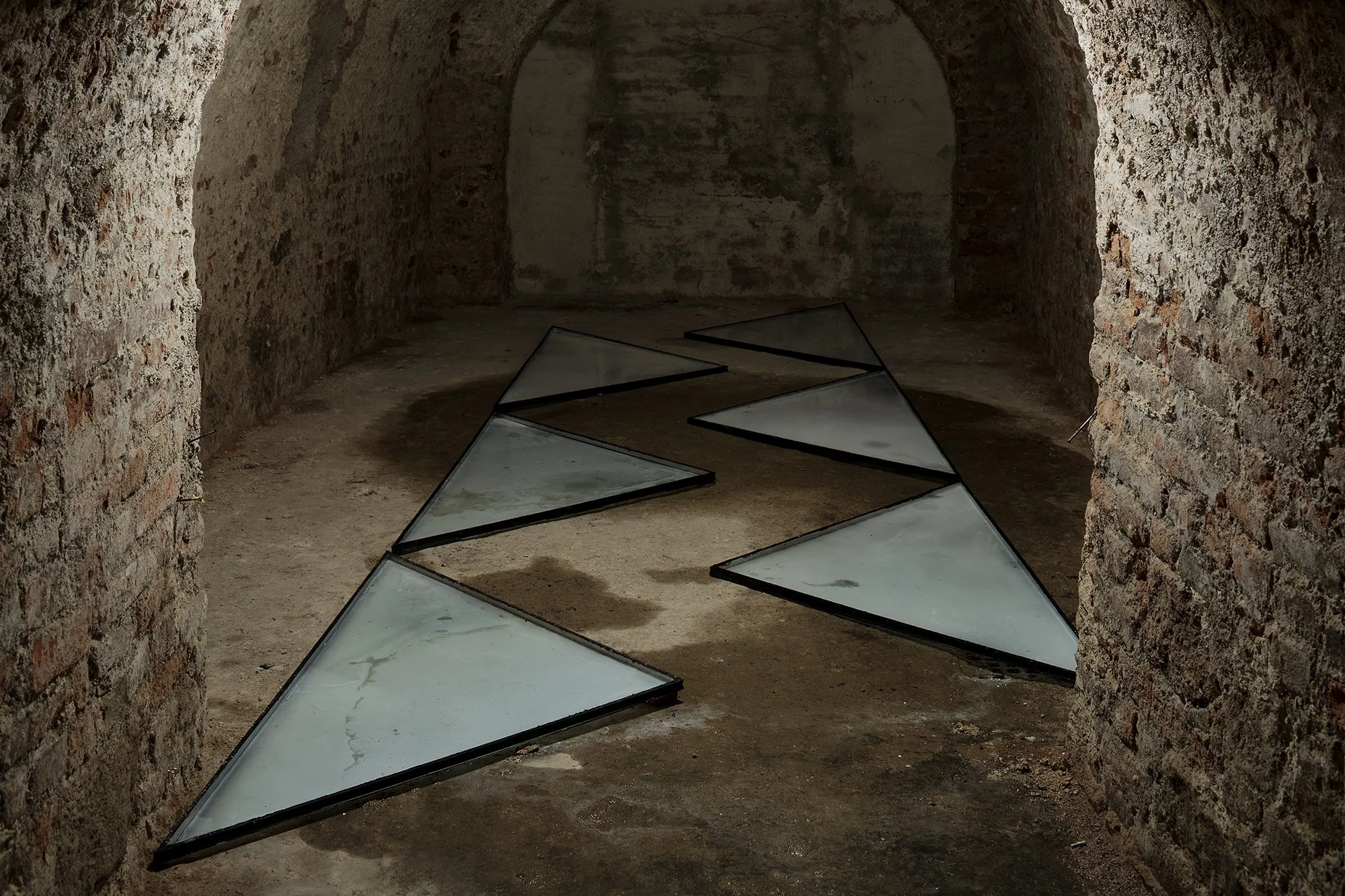
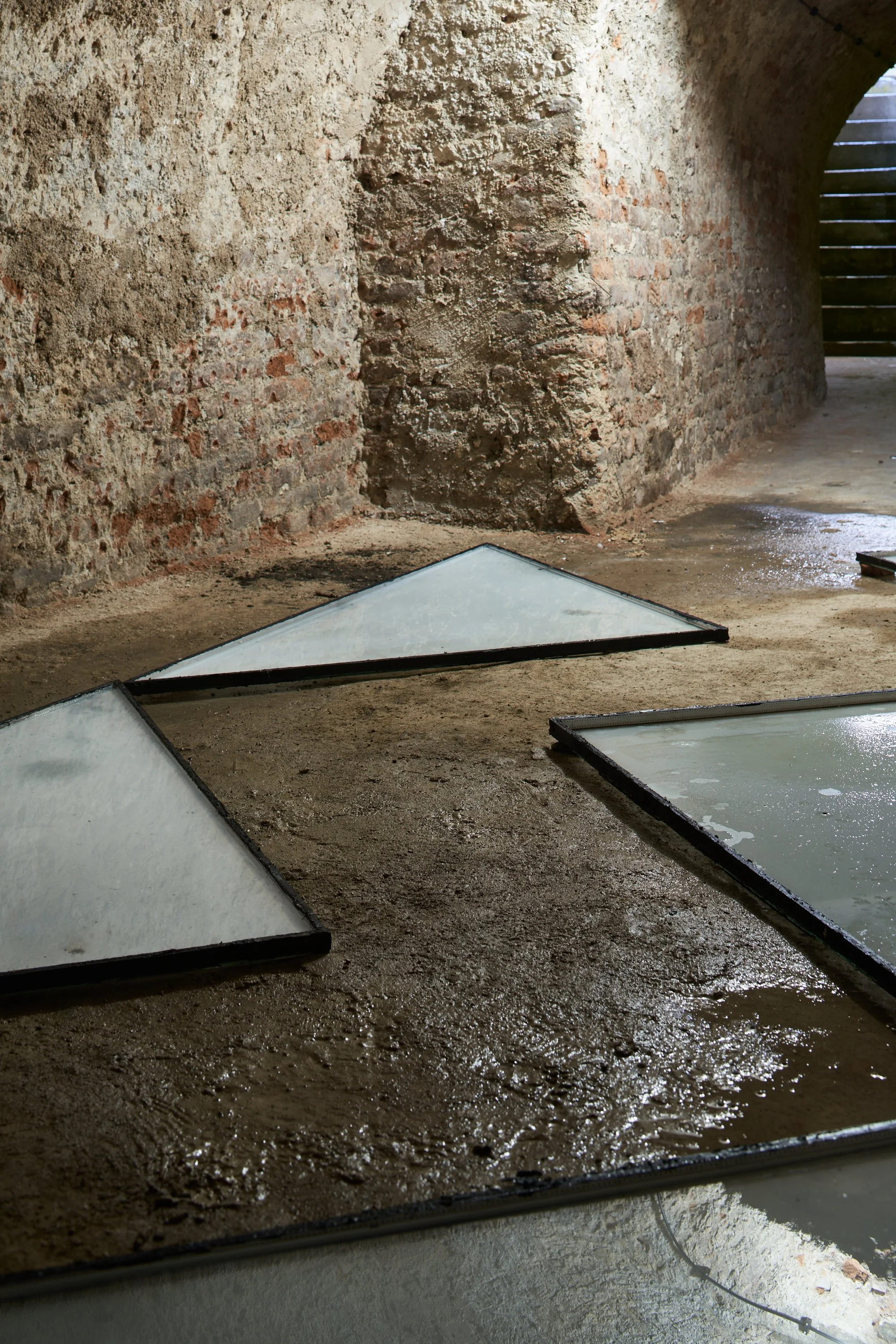
A little further on, Anzhelika Palyvoda’s boxes extend the work on the archive and on the survival of the trace. Made from found objects and crossed by incisions that place grafting, wound and transformation in tension, these surfaces present themselves as places of passage where matter registers external forces, retains them and reworks them, remaining in a condition of active vulnerability. Finally, activating the last space, Céline Struger’s work The Crystal of Non– Knowledge introduces a more opaque and sensory perceptual condition. Filled with a milky, reflective and slightly sedimented liquid, they impose themselves as compact and unstable presences in which depth, surface and reflection continue to slip into one another.

The whole exhibition is therefore defined as a passage through thresholds, positions and different intensities, in which trauma, memory and power insist on bodies, images and architectures, continuously redefining the way in which the visible takes form.
Massimiliano Maglione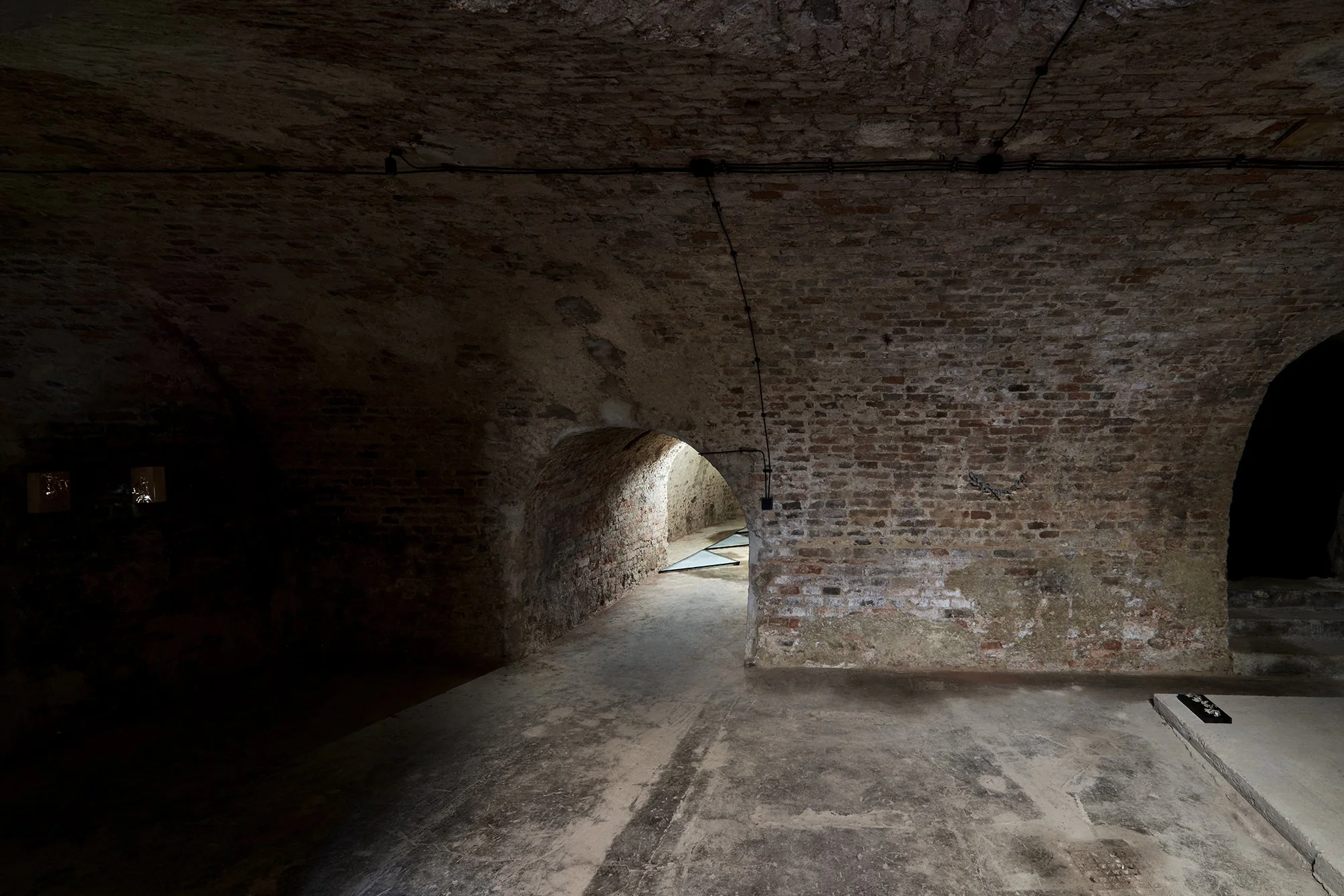
ECHOES THAT REFUSE TO FADE Anzhelika Palyvoda, Céline Struger, Sofiia Yesakova, FaVU Gallery, Brno, 2026.
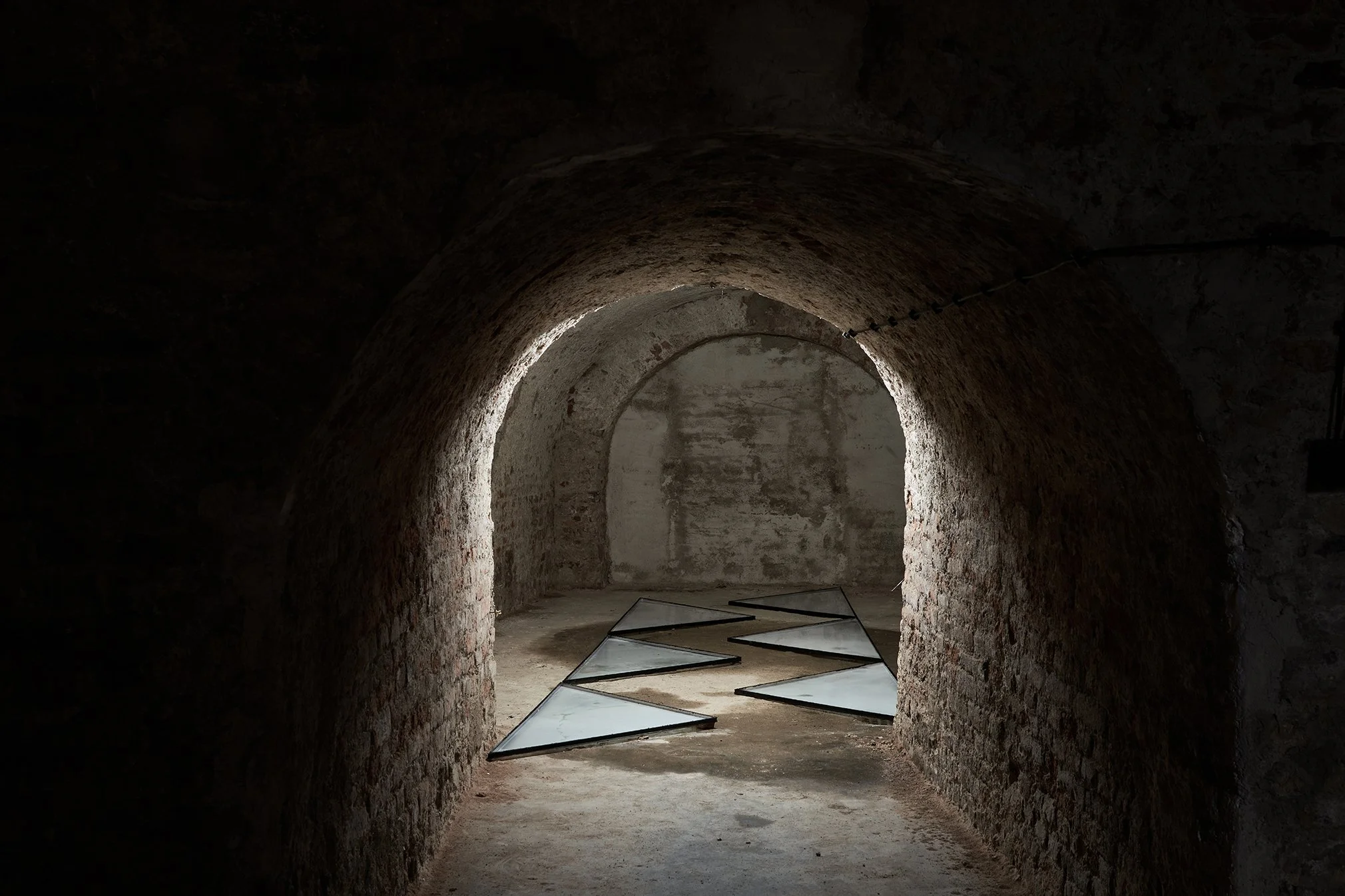
Céline Struger THE CRYSTAL OF NON-KNOWLEDGE, 2 × 200 × 480 cm, glass, water, essential oils, 2026
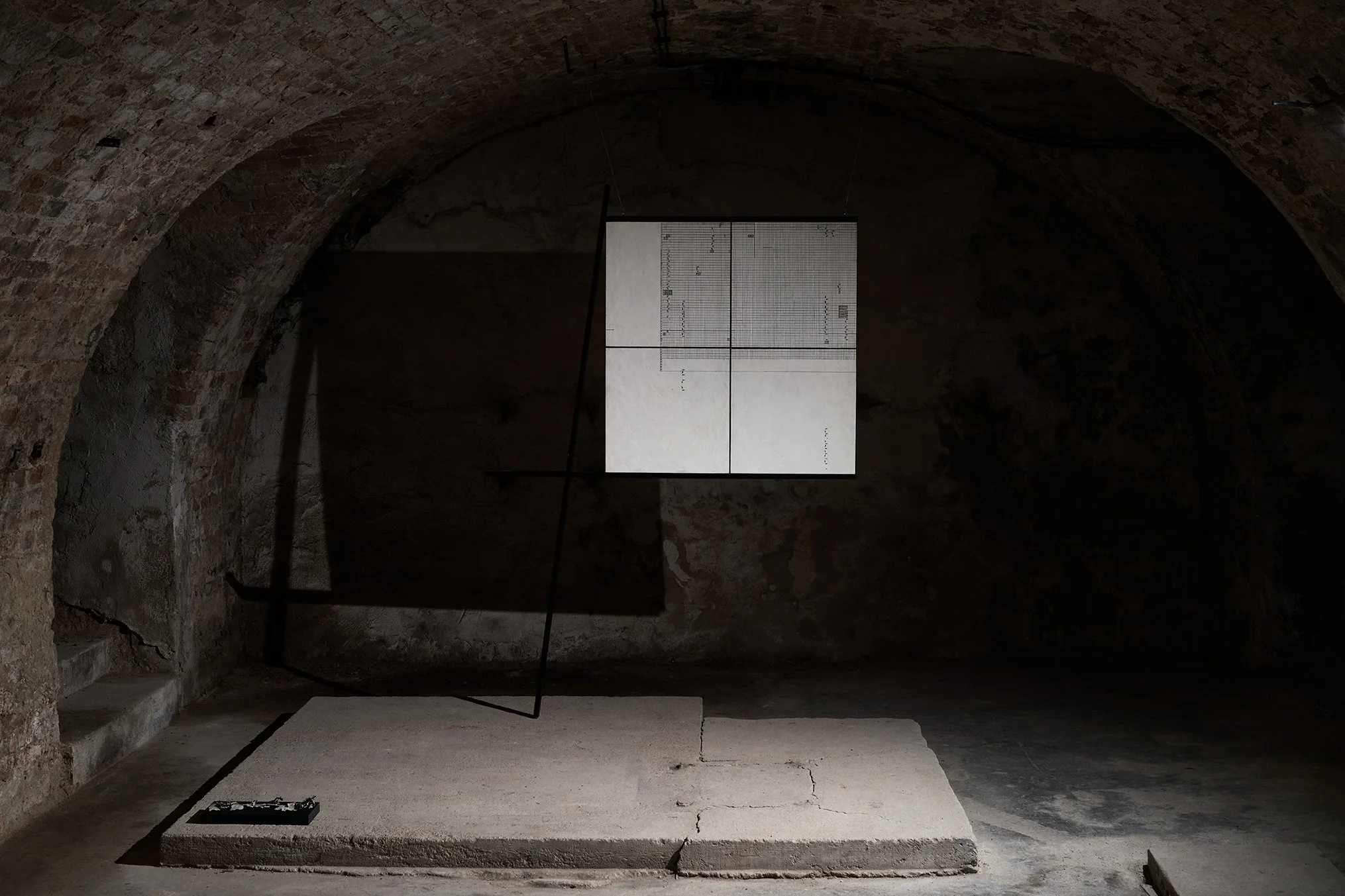
Sofiia Yesakova CARGO 200. "...", acryl, wood, nails, 200×100×4 cm, 2022
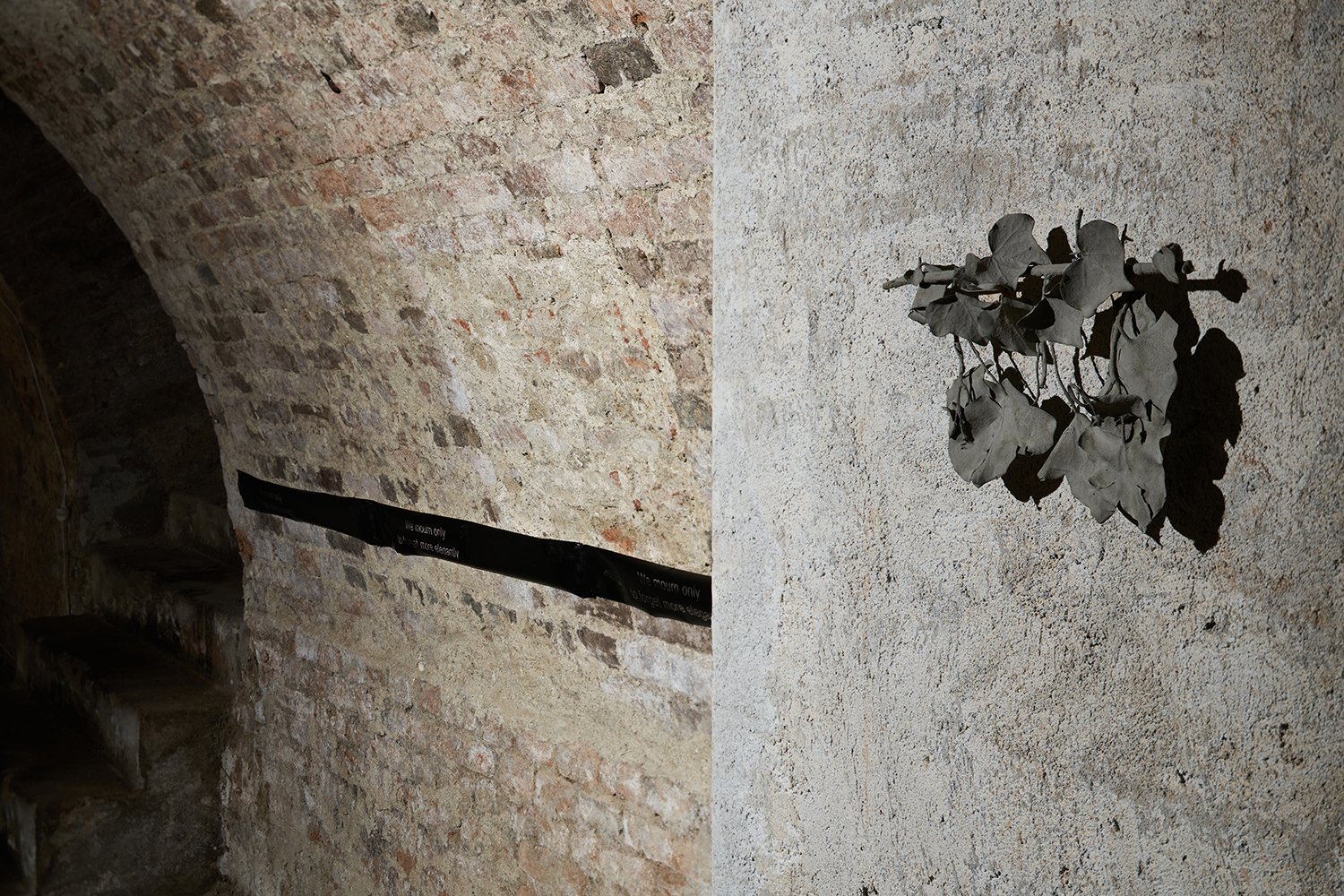
Sofiia Yesakova, Anzhelika Palyvoda
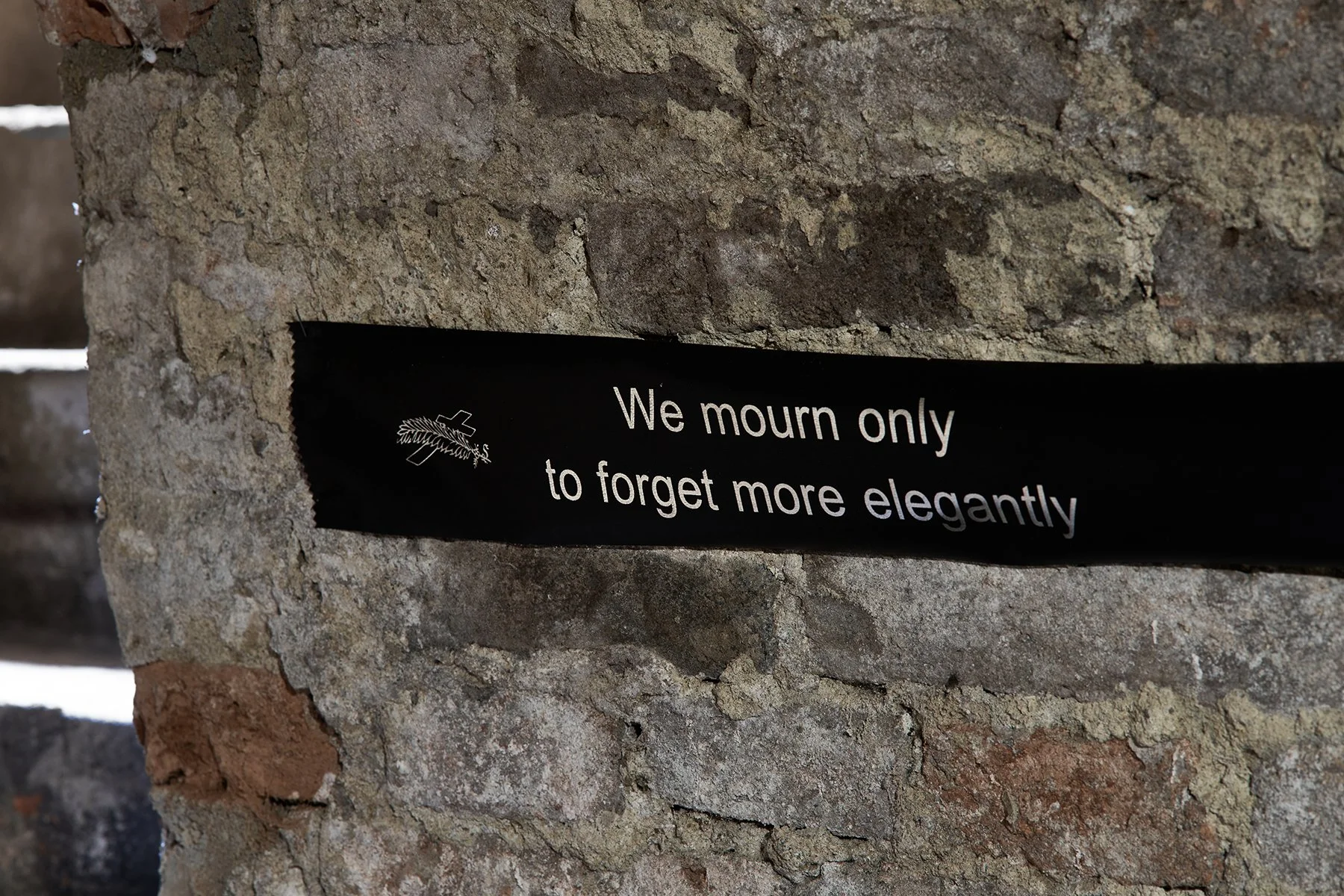
Sofiia Yesakova WE MOURN ONLY TO FORGET MORE ELEGANTLY, 400×15 cm,funeral ribbon, silver paint, 2026
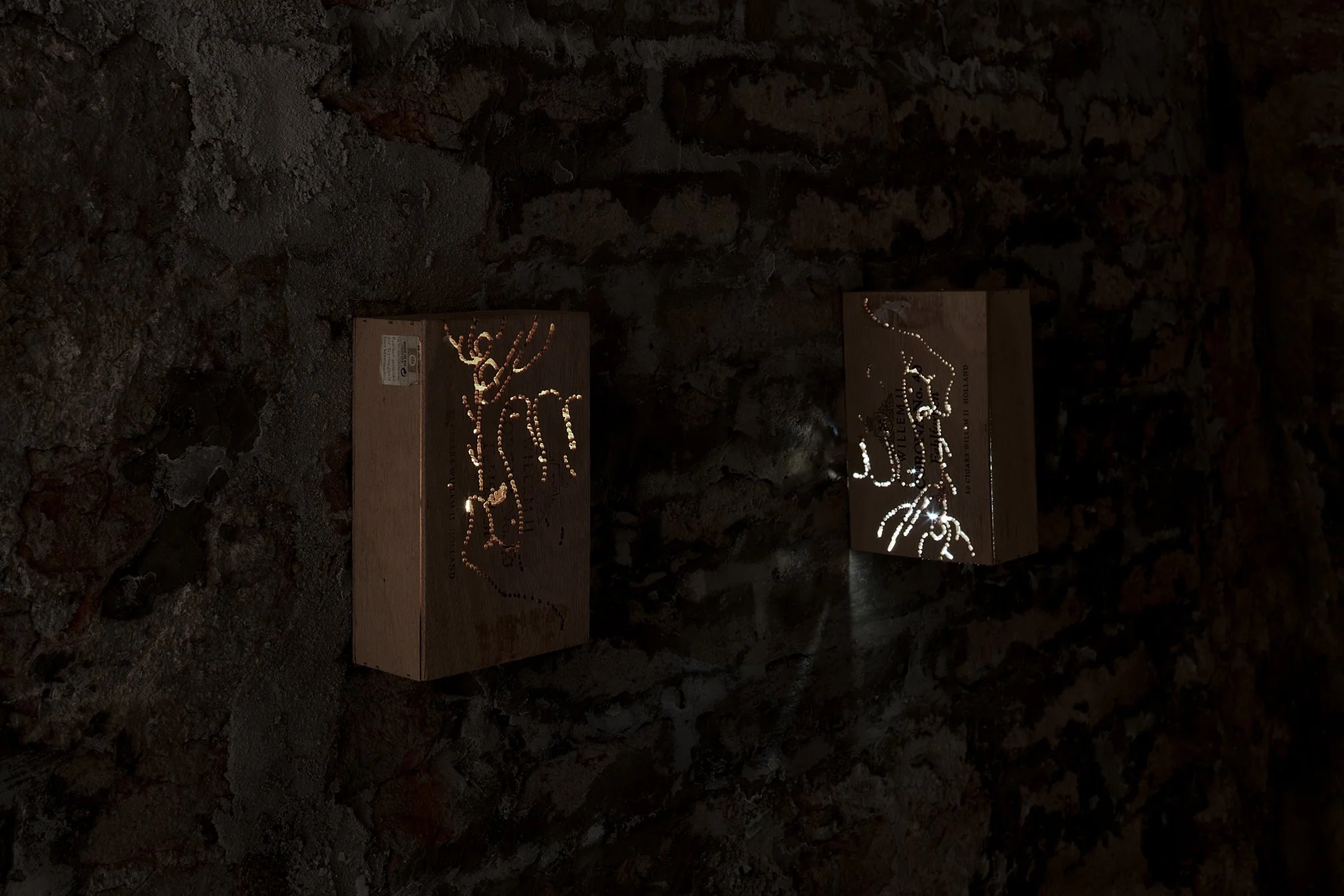
Anzhelika Palyovda NO TITLE, 20×11×4 cm 2026, found wooden box, led light, 2026
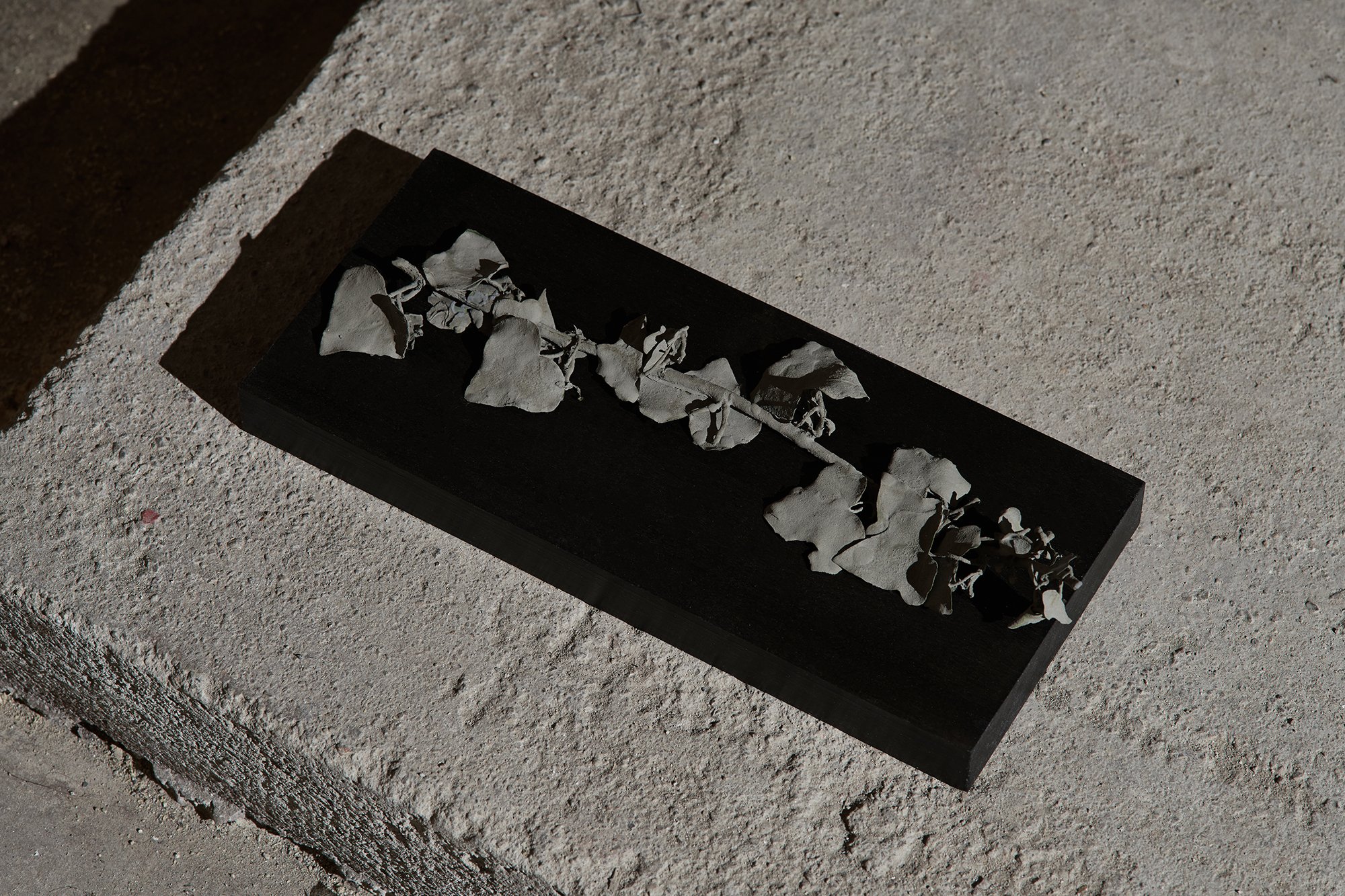
Anzhelika Palyvoda
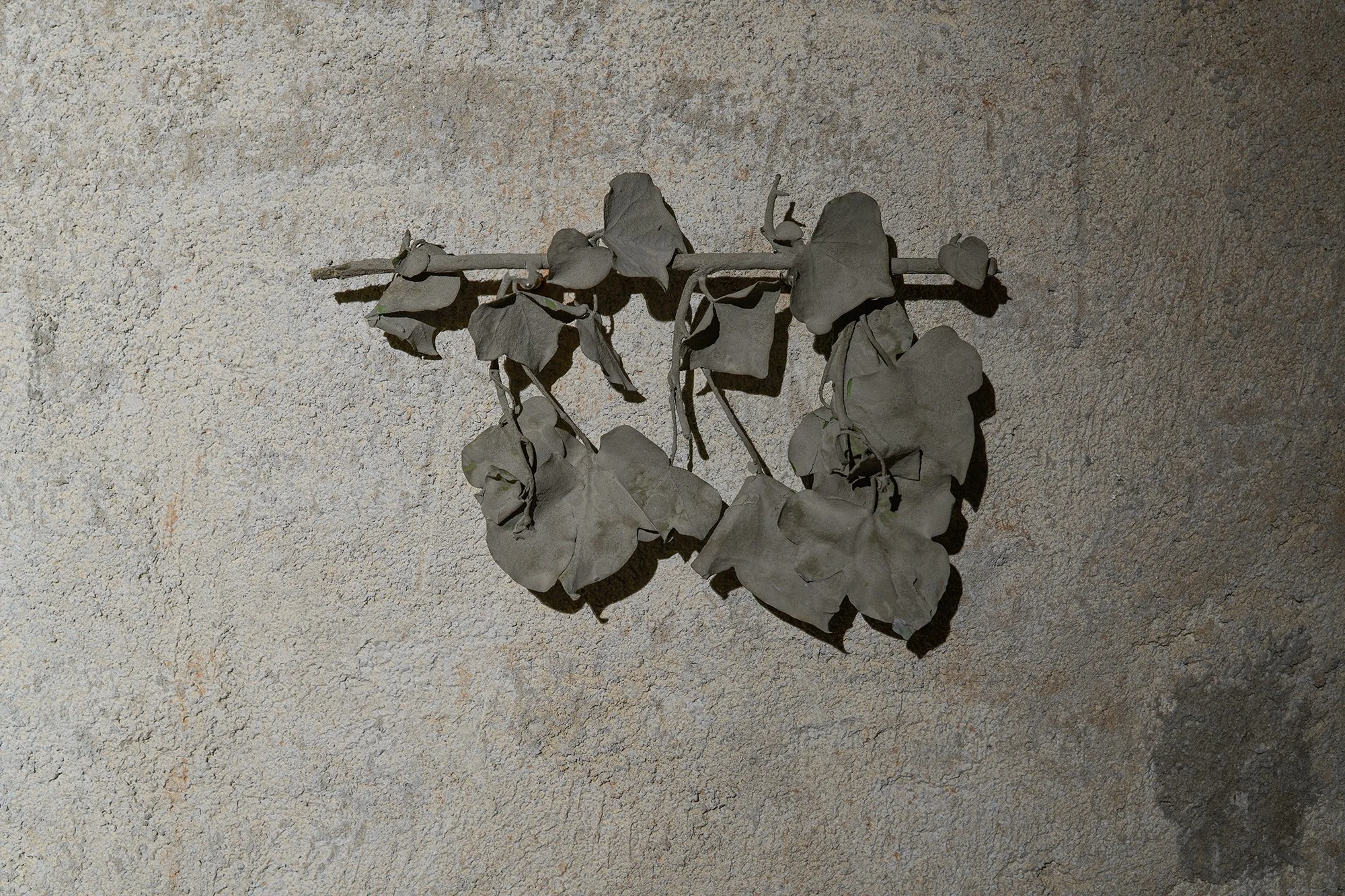
Anzhelika Palyovda WHEATNESS, size variable, concrete, found plants, 2026
FC: Polina Davydenko