Echoes
that refuse to fade
29.04.2026 — 10.06.2026 Gallery FaVU
artists:
Anzhelika Palyvoda
Céline Struger
Sofiia Yesakova
curator:
Massimiliano Maglione
FC: Viola Hertelova
"The exhibition brings together the practices of Sofiia Yesakova, Céline Struger and Anzhelika Palyvoda within a shared conceptual framework in which generational trauma, dark nostalgia, structures of power and residual points of view come together as parts of the same process, traces that share a common origin and continue to reactivate over time in different ways. Not everything that the past leaves behind takes the recognizable form of memory. Some inheritances escape a linear reconstruction, resist being fixed in clear images or complete narratives, and continue instead to act in the present as residues, entering language, architecture, and the very ways in which the gaze takes position in the world. These traces do not function as contents to be recovered, but as latent forces that constantly alter the present, producing perceptual shifts and unstable configurations in which what has been continues to redefine what is. It is from this persistence that the exhibition takes shape.

Memory is defined here as an unstable process, made of accumulation, shifts and returns, in which what has been lived or removed settles without ever fully disappearing. It remains in surfaces, materials, images that pass through everyday life, and in the forms we inhabit and that help structure our experience. Within this movement, trauma spreads in a diffuse, almost imperceptible way, integrating itself into the present until it becomes difficult to separate from it. Trauma is therefore inscribed within the very devices of perception, producing a gradual normalization that reduces its recognizability without removing its effect. Power also takes shape through this dynamic. Before becoming visible in its institutional forms, it is rooted in myths, beliefs, rituals and narratives that symbolically organize a community. These structures tend to transform and reappear in new configurations, maintaining an underground continuity that moves across different periods. Power then acts as an internalized form of organizing reality, able to guide behaviors, desires and modes of adherence without the need for explicit control.

If power directs the gaze and organizes the visible, the anatomical theatre offers a structure able to make this mechanism readable. The exhibition adopts this model as a conceptual device, as a space that establishes hierarchies, distributes positions and defines a staging of the gaze. The visible takes shape within a distribution that includes and excludes, making perceptible only what falls within a certain sensory order.

Within this configuration, the body becomes the point where these dynamics meet, the surface on which the processes through which knowledge and control take form are inscribed. The body is defined here as a material presence exposed to the gaze and to intervention, as an active archive crossed by forces that shape it and make it readable within systems of knowledge and power. In the anatomical theatre, this condition becomes a precise organization of space and vision, where positions are arranged according to a defined hierarchy and distances construct relations of power. To see already means to take a position, to participate in a device that constructs the very conditions of visibility.

The artists respond to this theoretical structure through different practices, spreading the discourse of the exhibition across the spaces and their specific perceptual thresholds. In the main space, an elevated architectural section invites the public to step up, introducing in concrete terms that condition of overlook already implied in the conceptual structure of the project. From this position, the gaze is organized according to a precise hierarchy and experiences a distance that changes the reading of the whole, making clear that every act of seeing depends on a point of access and on the conditions that make it possible. It is within this field that Céline Struger’s work enters.

The Equalizers, sculptural fragments, hold history in the form of something manipulated, exposed and reorganized. In them, the past emerges as matter continuously reworked, crossed by processes of rewriting that show how historical transmission is always built from a position. From here emerges the question that runs through the whole exhibition: who decides what we see, and from which point of view something acquires value, readability, or legitimacy?

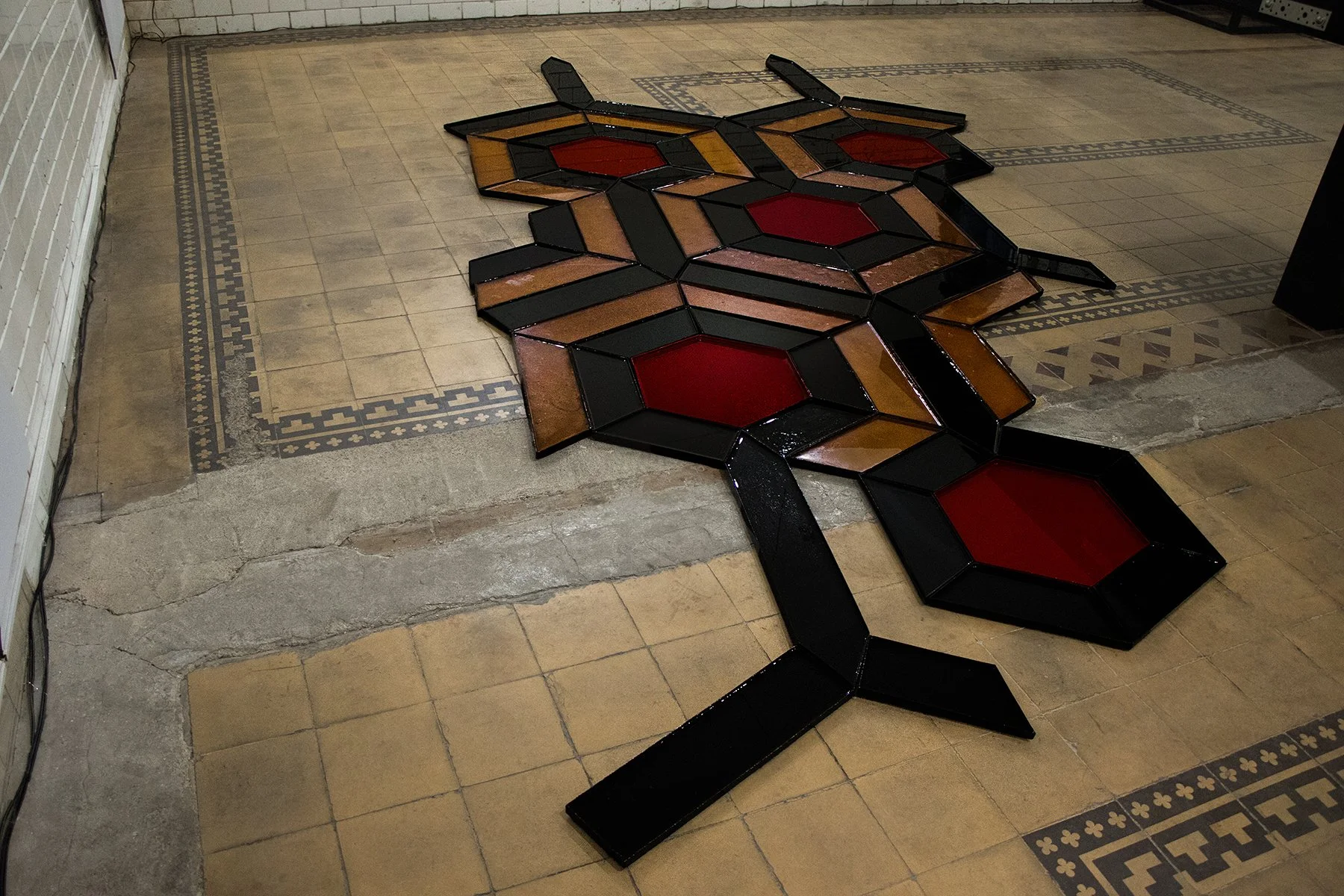
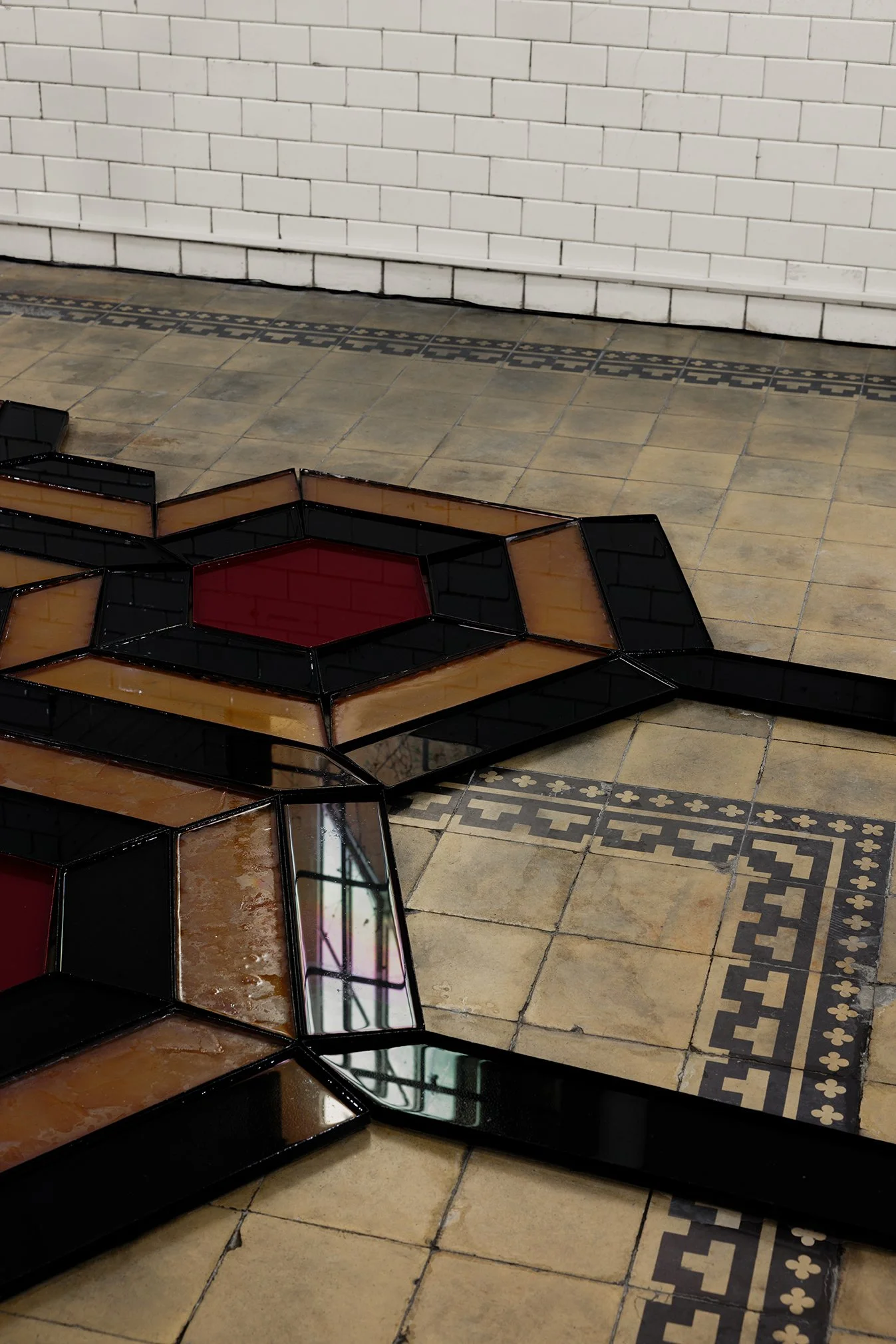
Concave evenings on the ground spread across the floor build a texture that is at once familiar and disturbing, able to destabilize orientation and turn the surface into an unstable perceptual device.

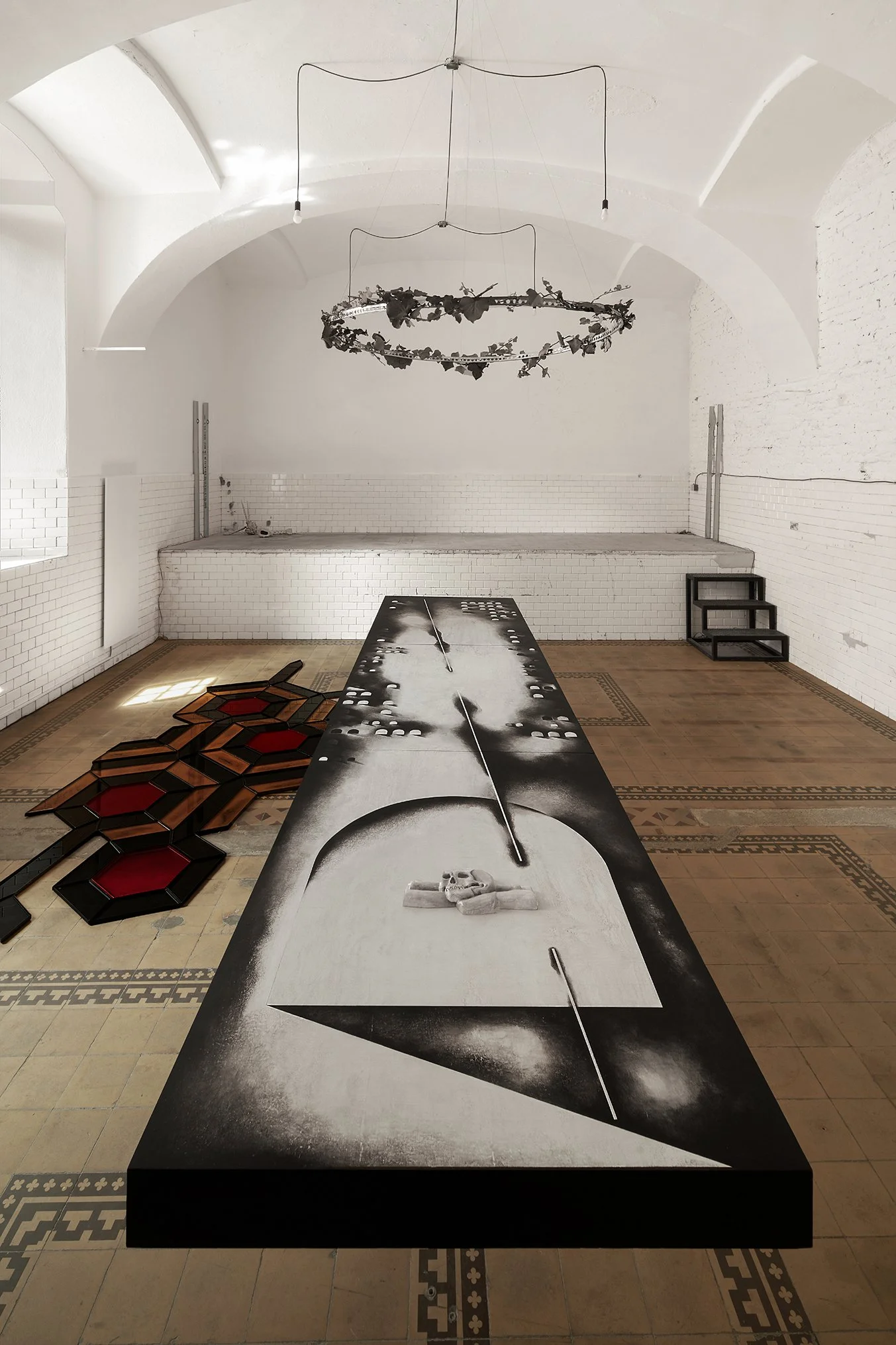
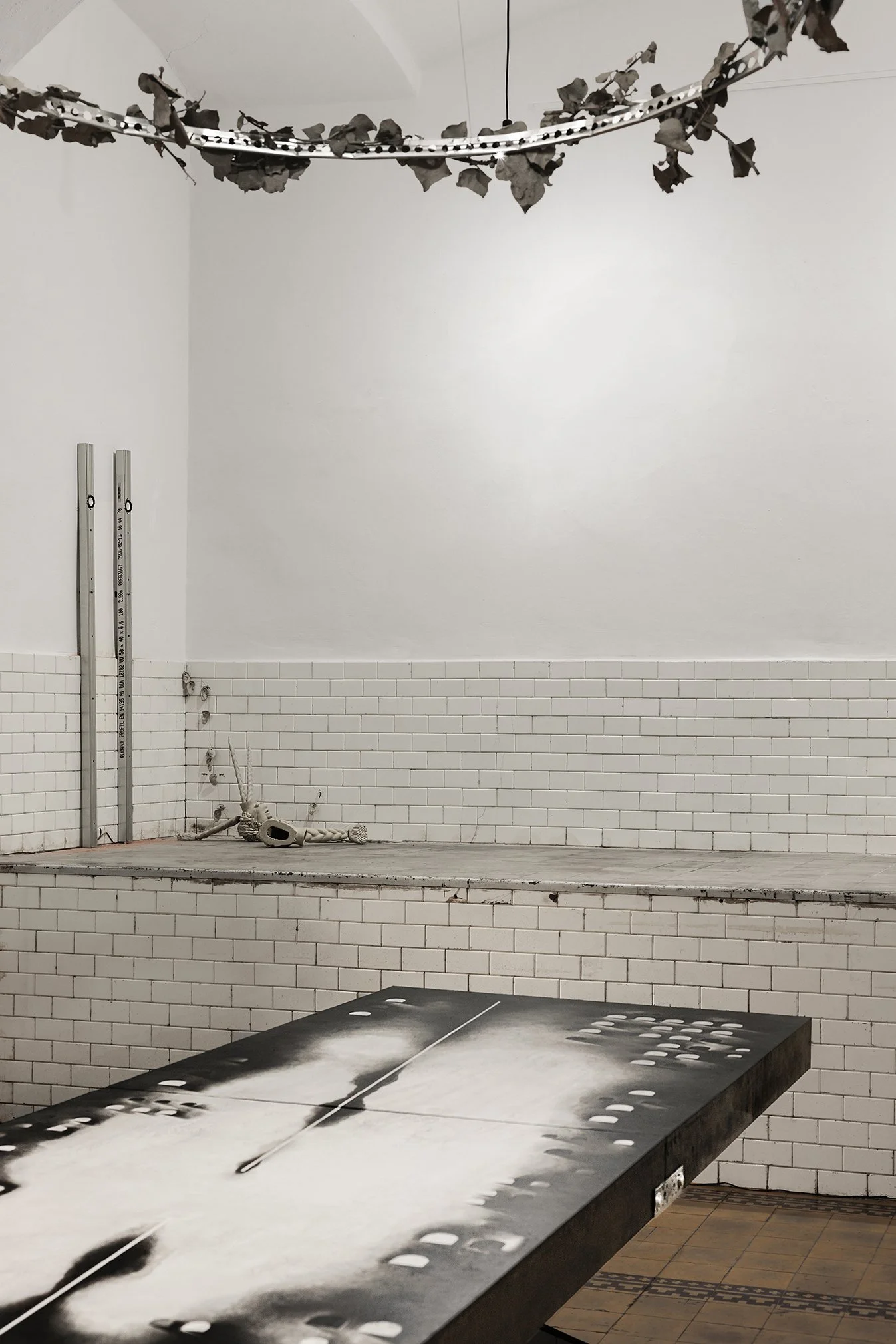
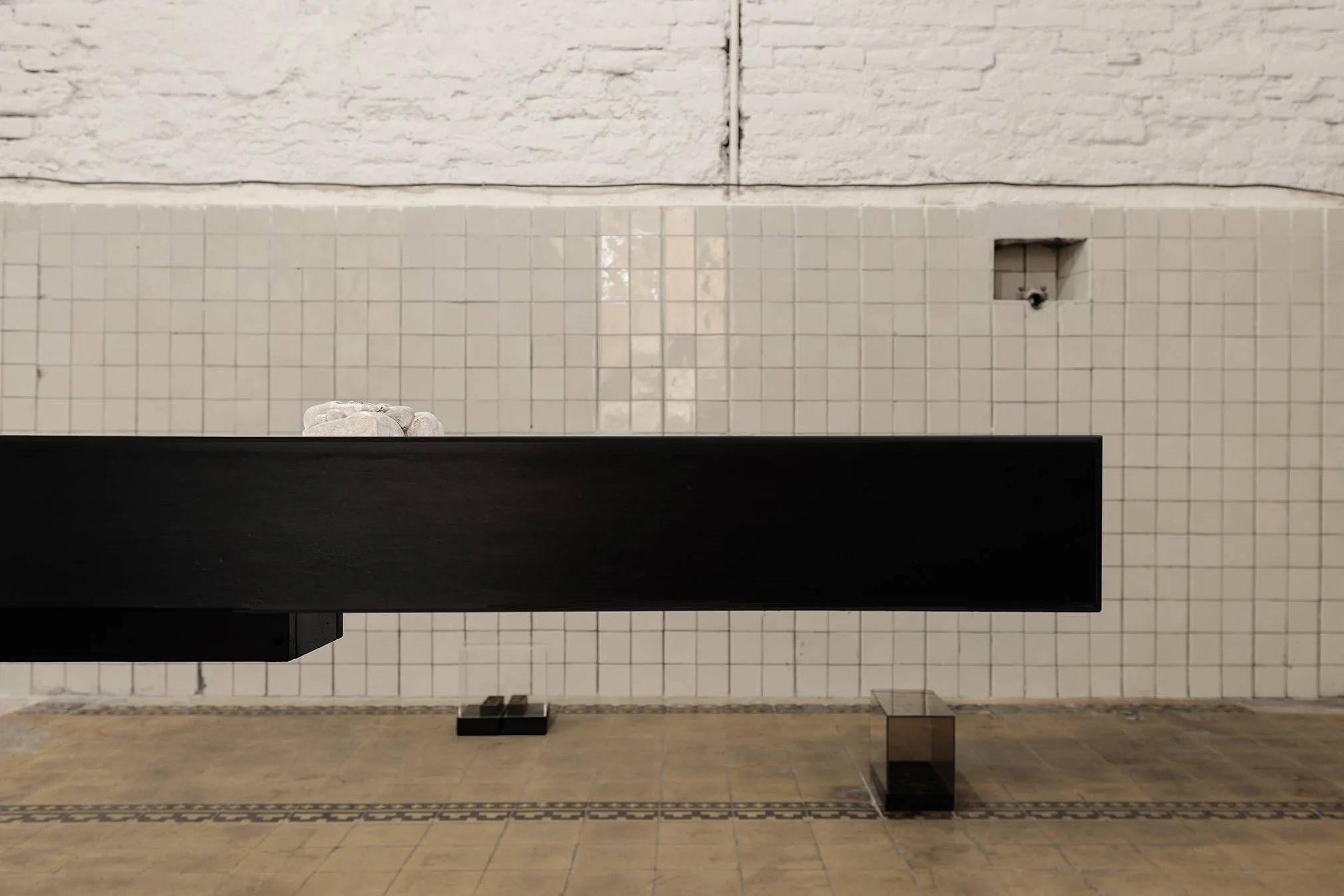
In the same space, Sofiia Yesakova’s “We mourn only to forget more elegantly” in the form of a table, introduces a further articulation of these dynamics. Its horizontal presence imposes itself as an operative surface and as a displaced fragment, close to the appearance of an architectural portion taken from a sacred context, almost like a section of a fresco transferred, extracted and relocated. The work forces the visitor to constantly adjust their position, through approaching, moving around it, observing it from above, and pausing nearby, activating a closeness that makes the gaze a form of implication.

In the same room, Anzhelika Palyvoda works on memory as an unstable and persistent archive, turning architecture into a resonance chamber that amplifies the sound dimension and spreads it through space as a diffused presence. The vertical structures on the sides, Choristers, crossed by sound, activate a choral landscape suspended between individual trace and shared mourning. The sound that comes from the four metal structures comes from an archive built by the artist over time, where personal memory and collective memory are intertwined and continue to reactivate in the present. Above the space, Anzhelika Palyvoda’s Kranz, a crown, appears as a point of maximum tension, defining a vertical hierarchy that organizes the whole installation and visually weighs on the space below as a presence that is both symbolic and material, suspended between commemoration, suffering, glory and fragility. The blind drawings, Fresco, made through dust and perforation hold the image in an intermediate condition, spectral and still forming. In them, the body returns as a latent figure, a residue that emerges without ever fully fixing itself, as if memory could appear only through passages, deposits and minimal crossings.

Every attempt to order the world leaves behind a residue, an excess that escapes control and continues to exert constant pressure on the present. This excess reveals the partial nature of every system and prevents its complete closure. History can also be read within this tension, as a dynamic of returns and transformations, as a reactivation of deep structures that change over time without being exhausted. What seems to be over tends to re–emerge, redefining the forms through which it appears. In this perspective, history proceeds through stratifications, and every present contains active residues that complicate its reading and prevent its final stabilization.
Massimiliano Maglione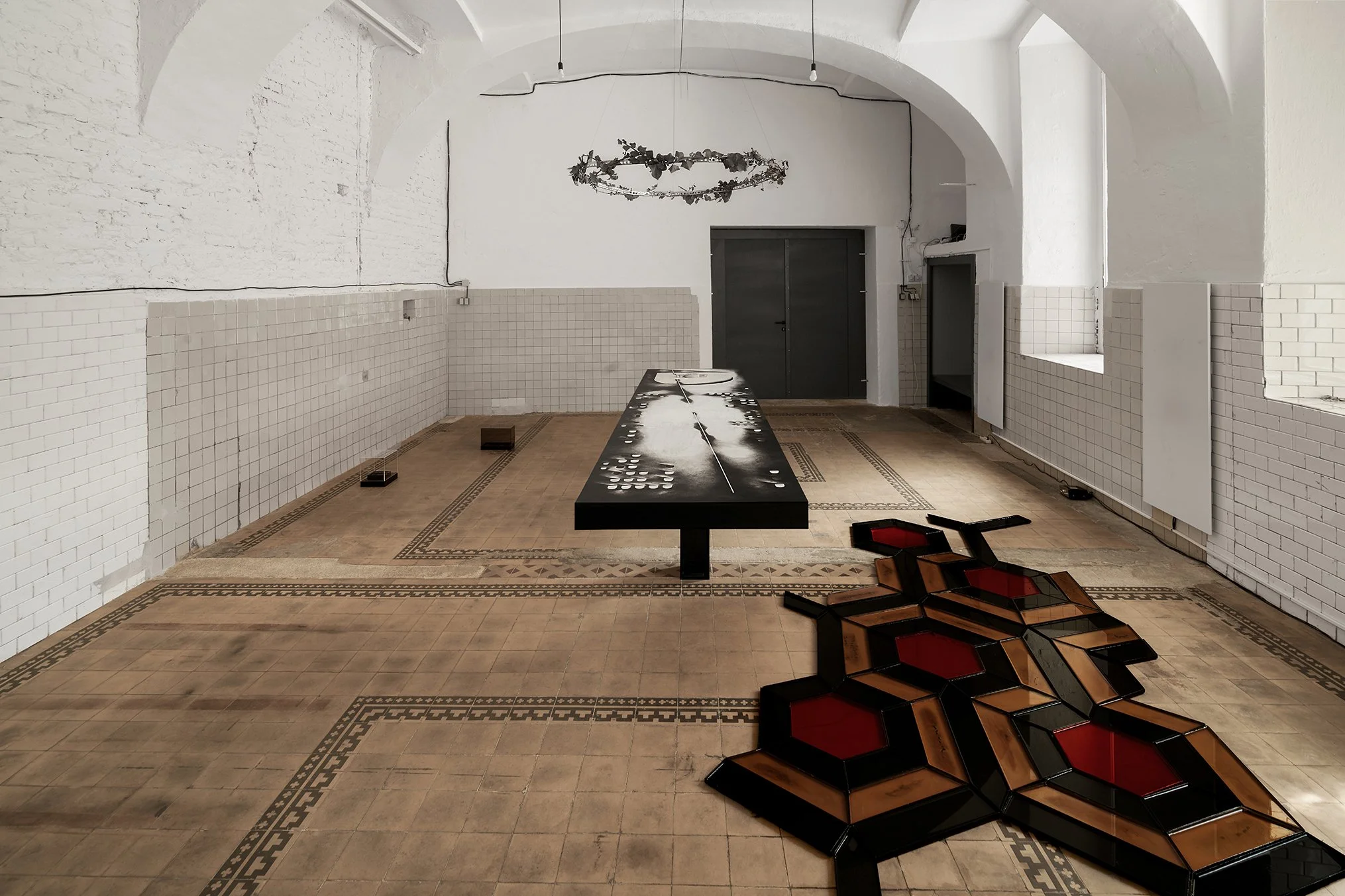
ECHOES THAT REFUSE TO FADE Anzhelika Palyvoda, Céline Struger, Sofiia Yesakova, FaVU Gallery, Brno, 2026.
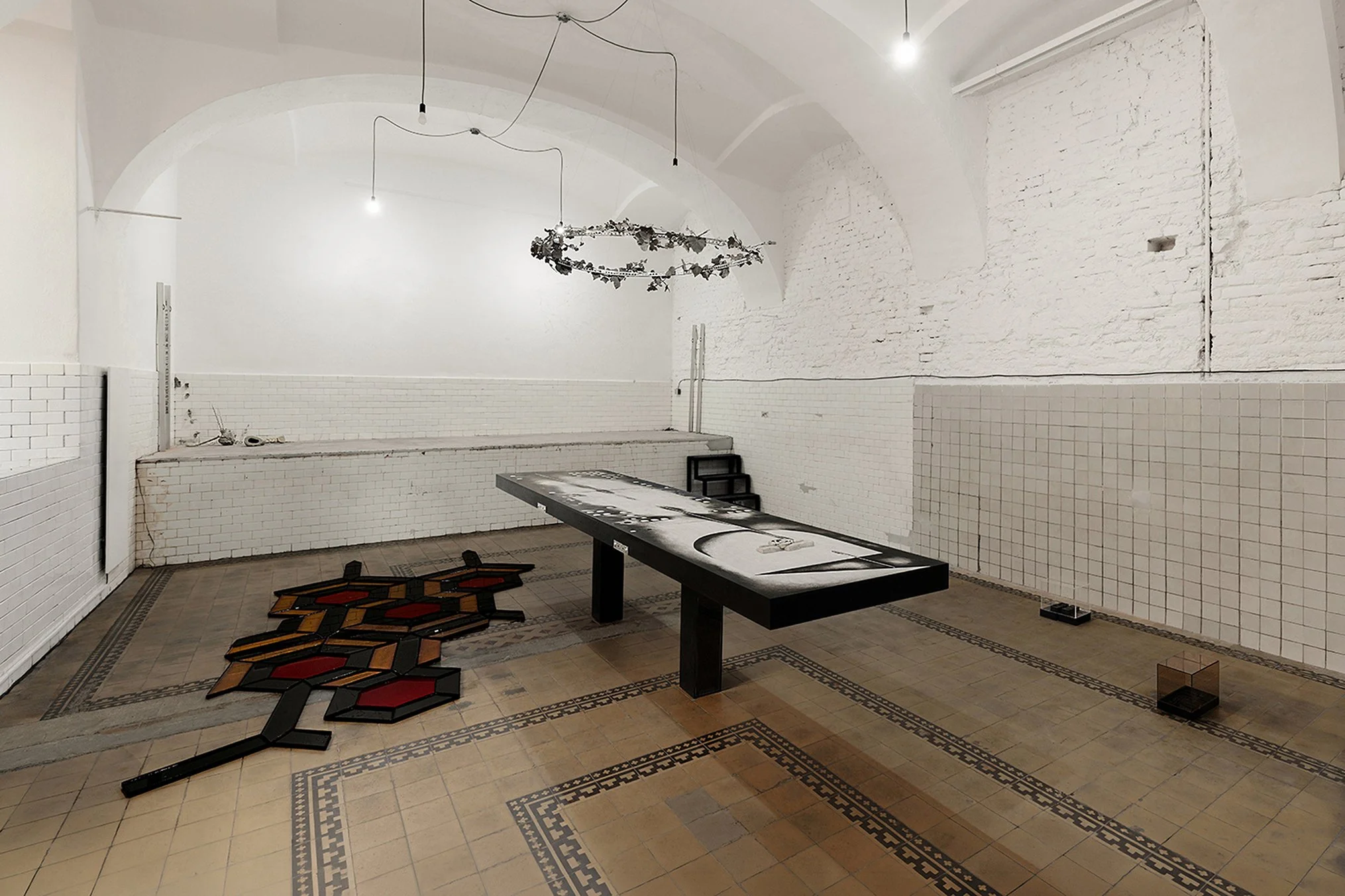
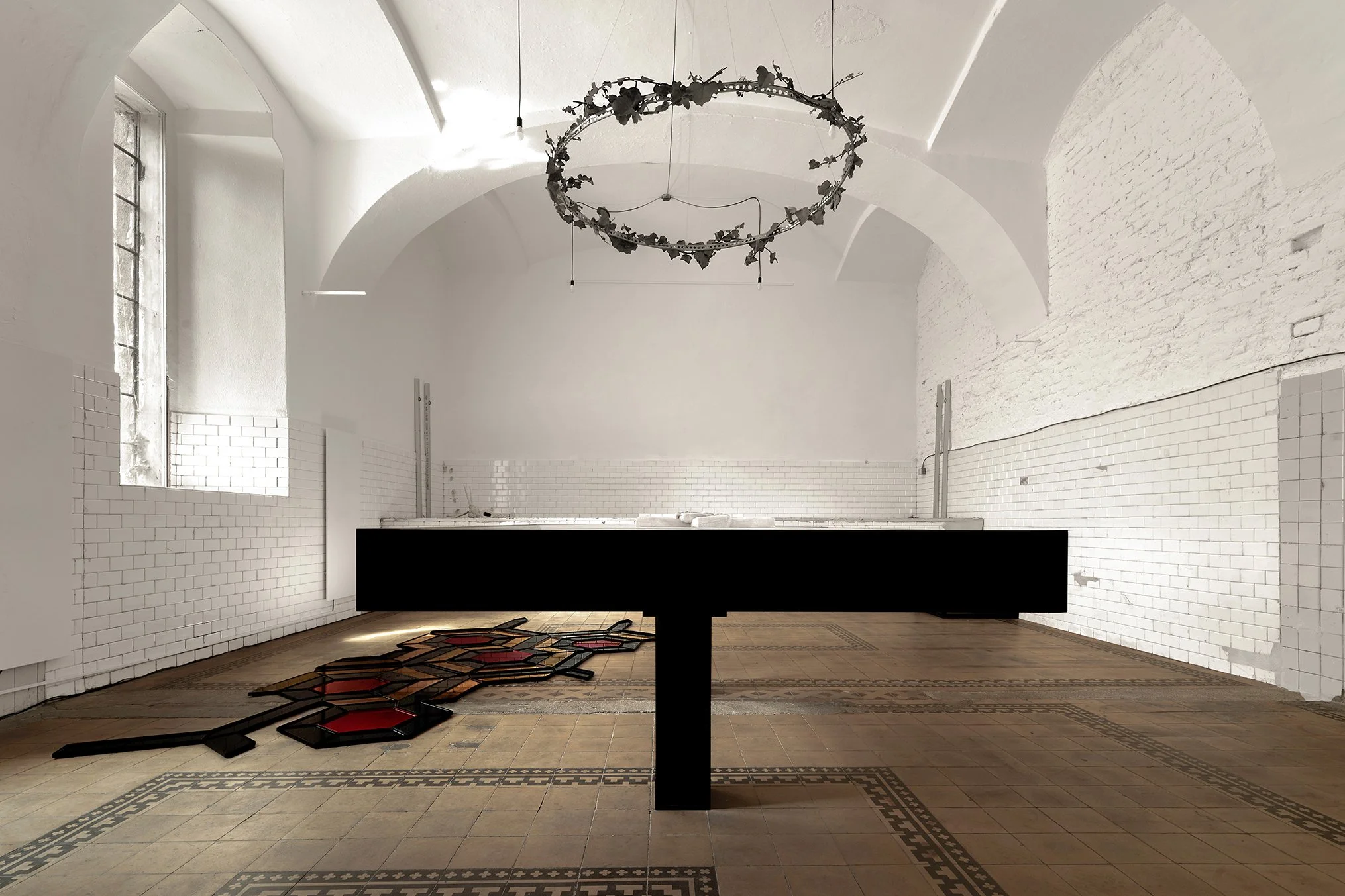
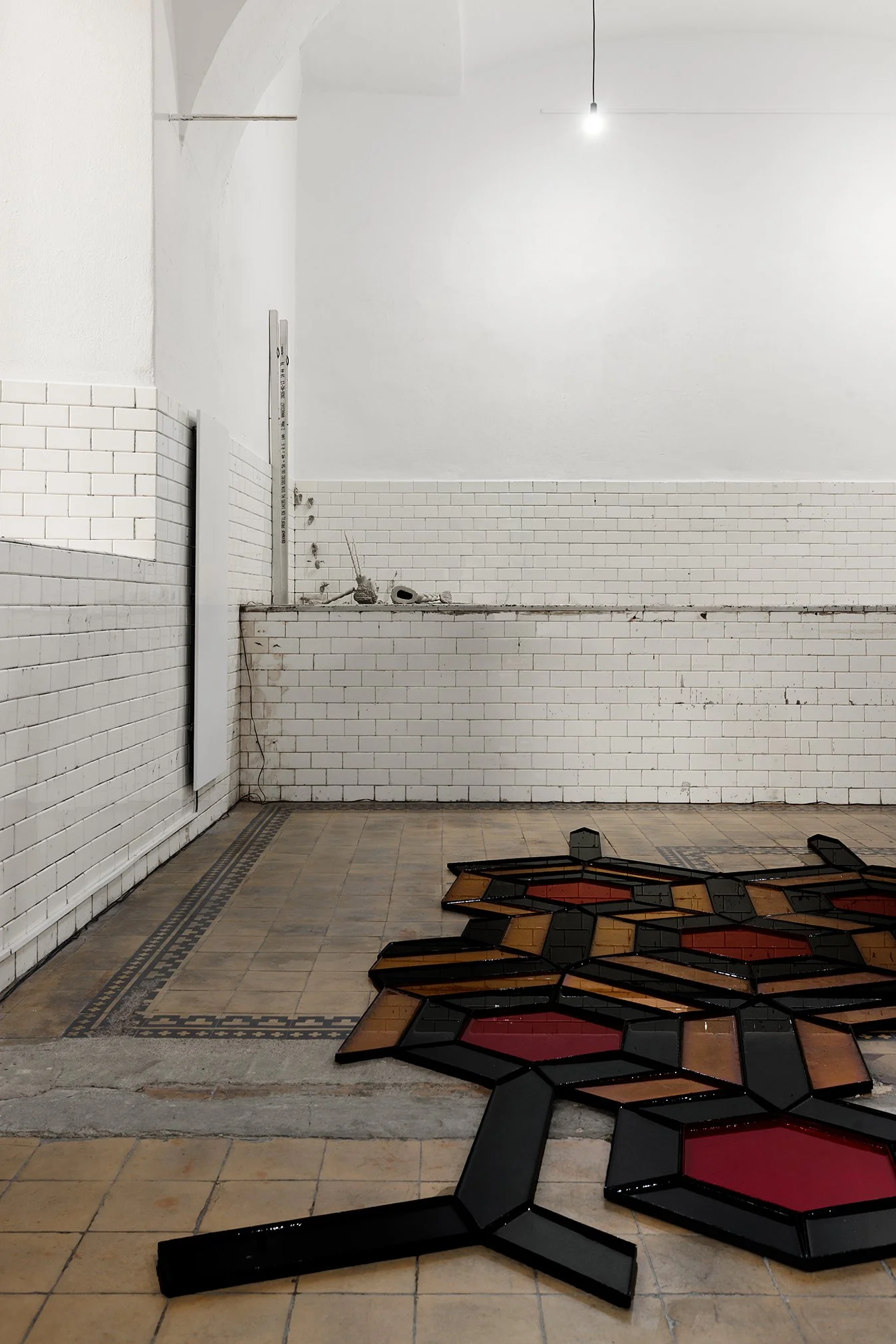
Céline Struger CONCAVE EVENINGS (installment No 1), 2×195×370 cm, steel, water, rust, 2026.
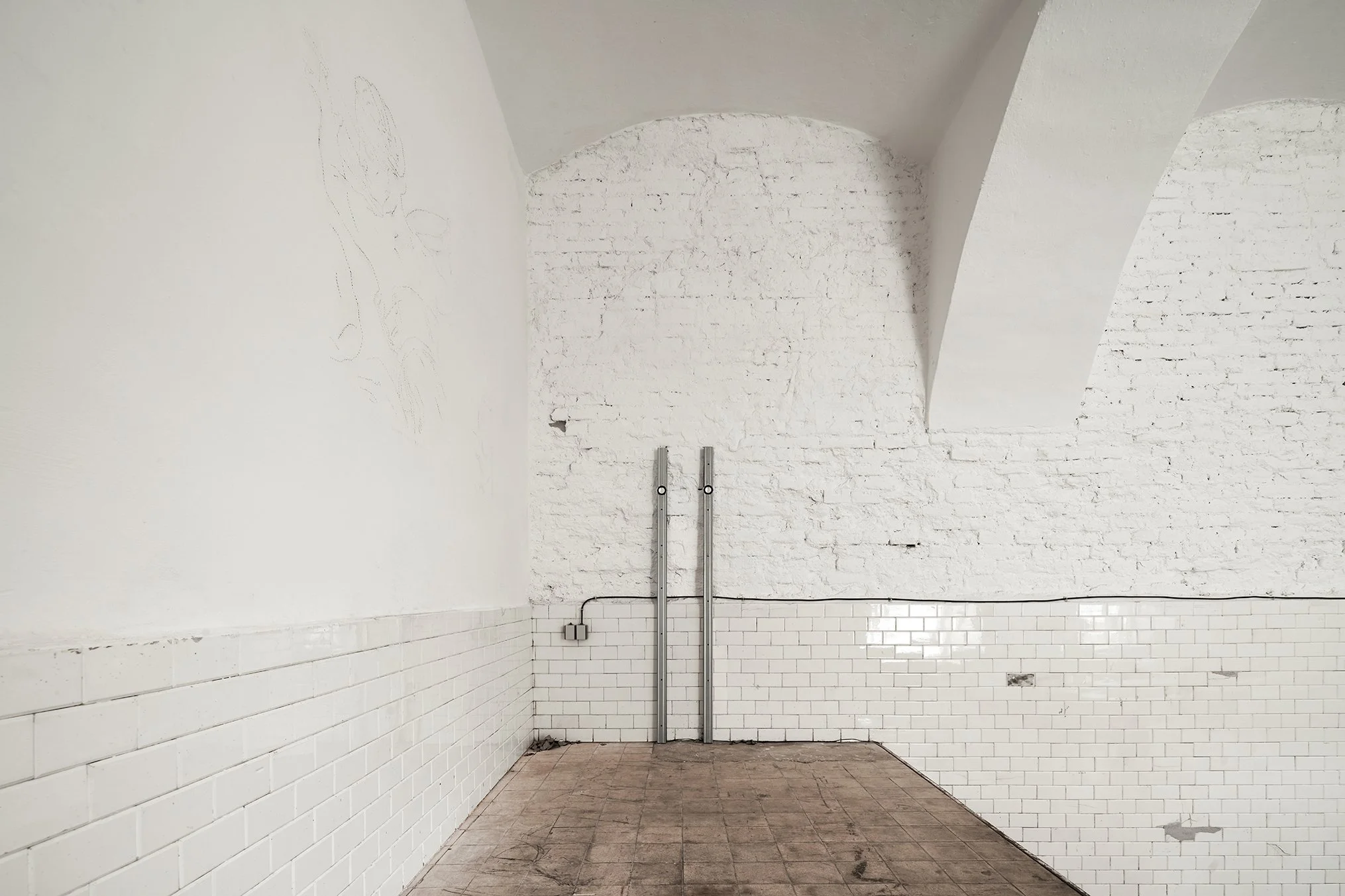
Anzhelika Palyvoda
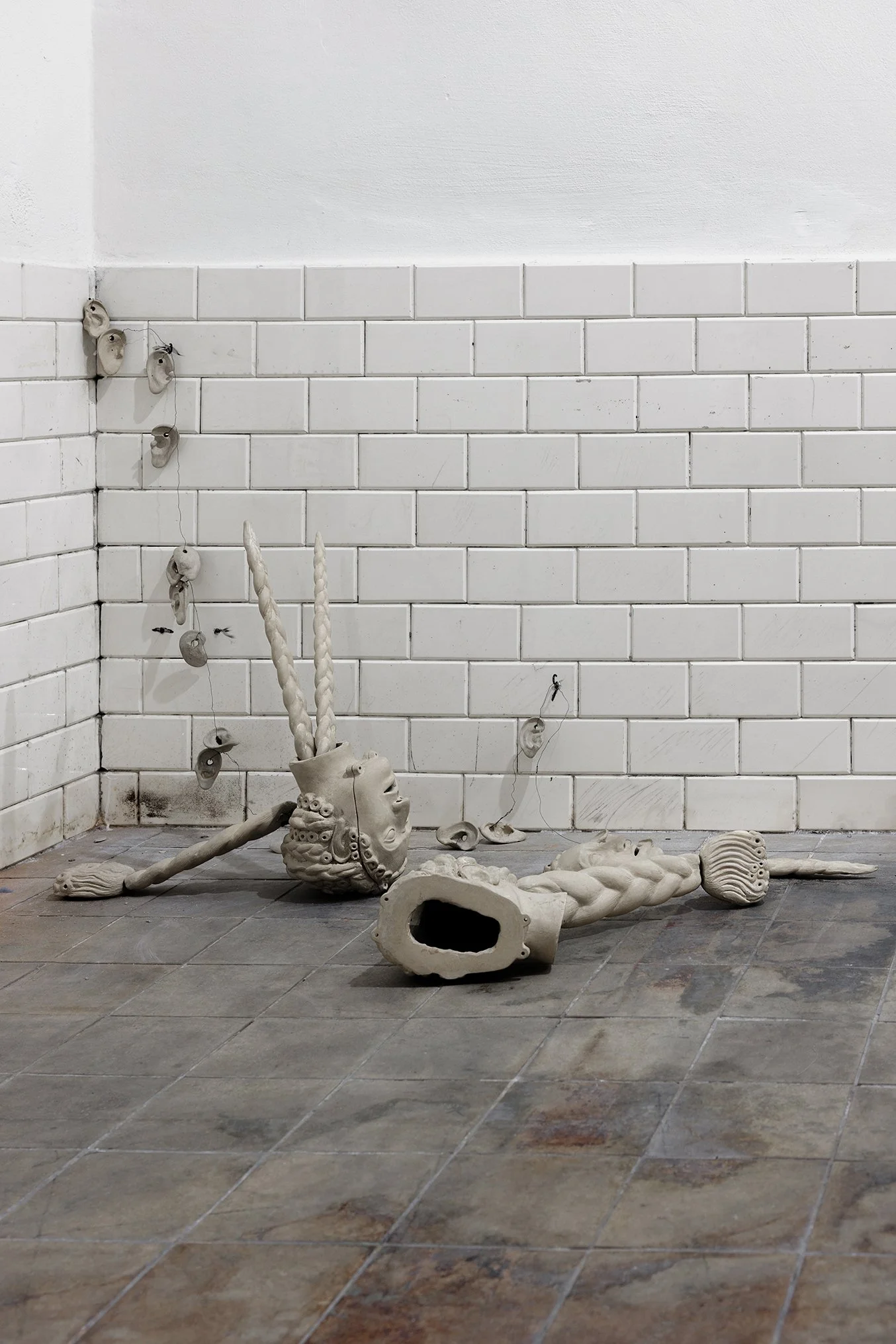
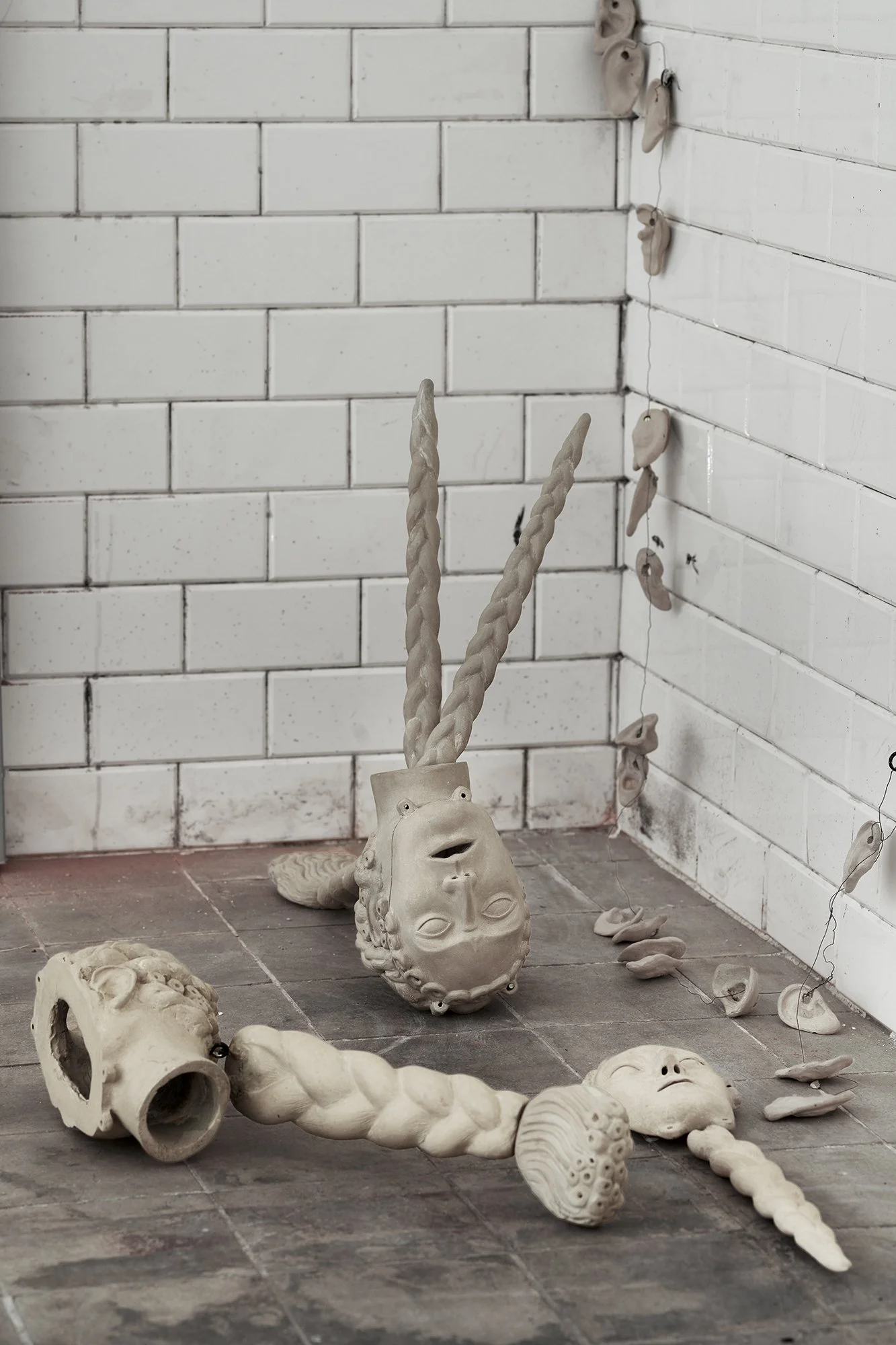
Céline Struger EQUALIZER I+II (heads & ears), 74 × 110 × 65 cm, ceramics, 2026
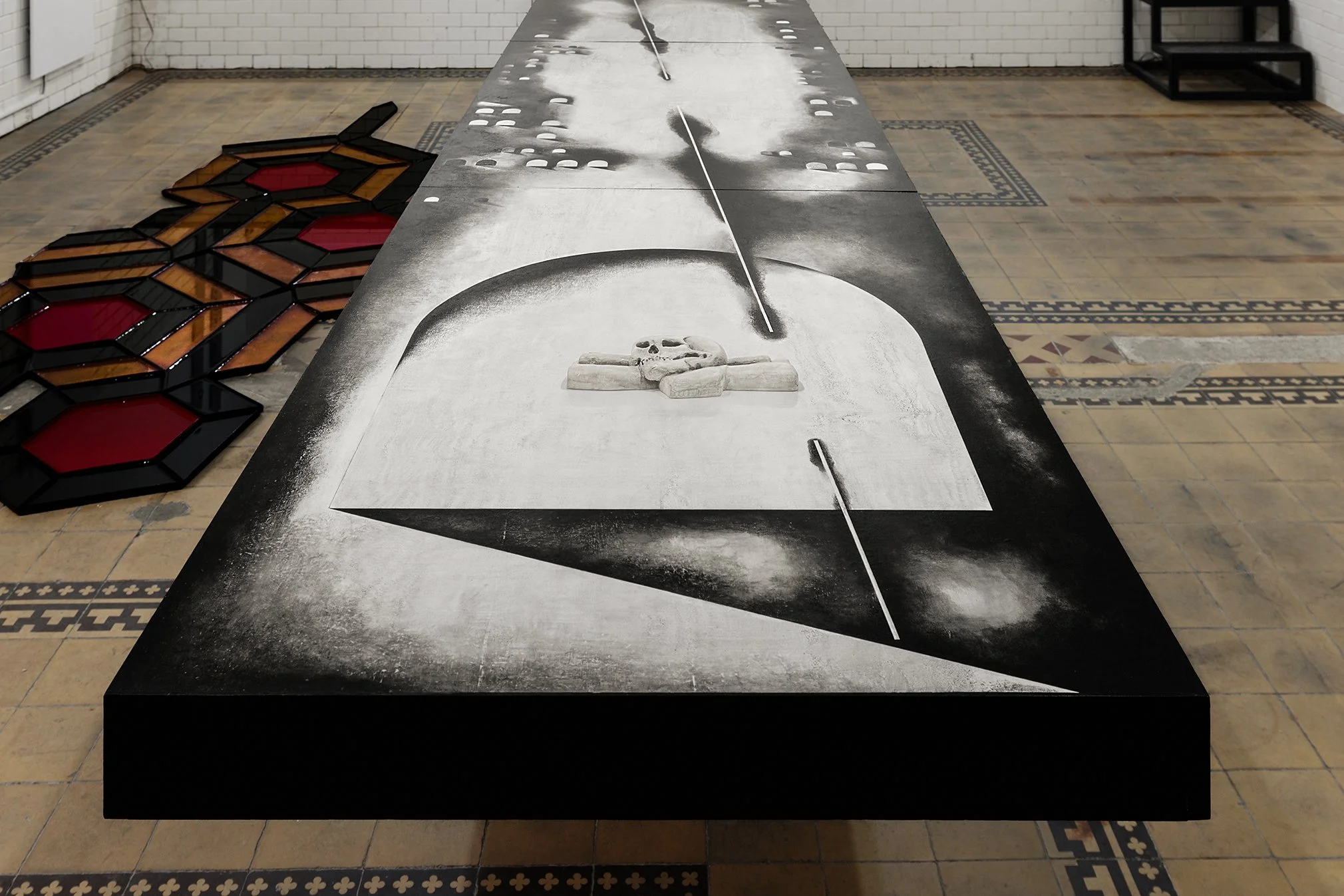
Sofiia Yesakova WE MOURN ONLY TO FORGET MORE ELEGANTLY 1.1., 400×100×10 cm, acryl, gelatine, gesso, wood, 2026
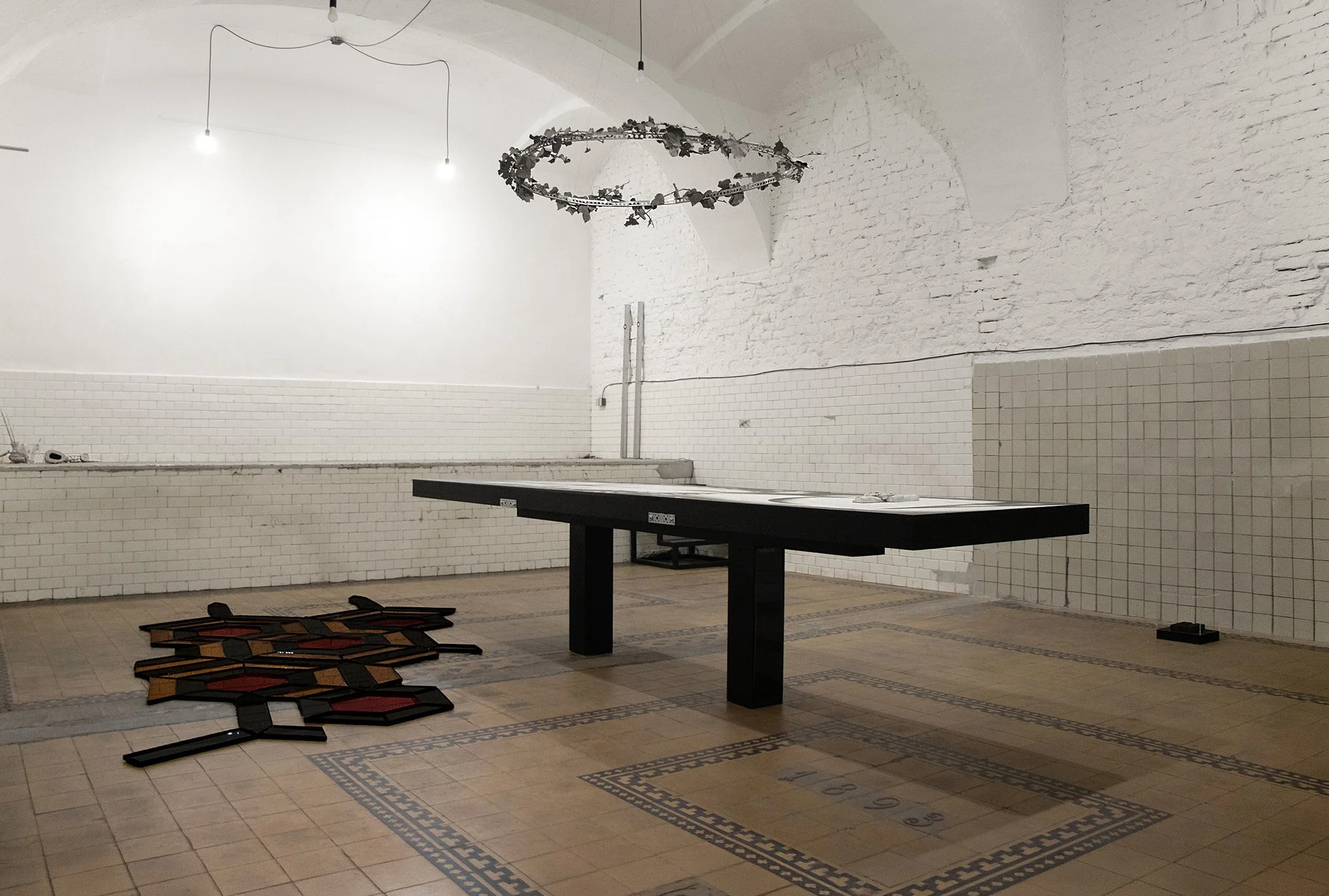
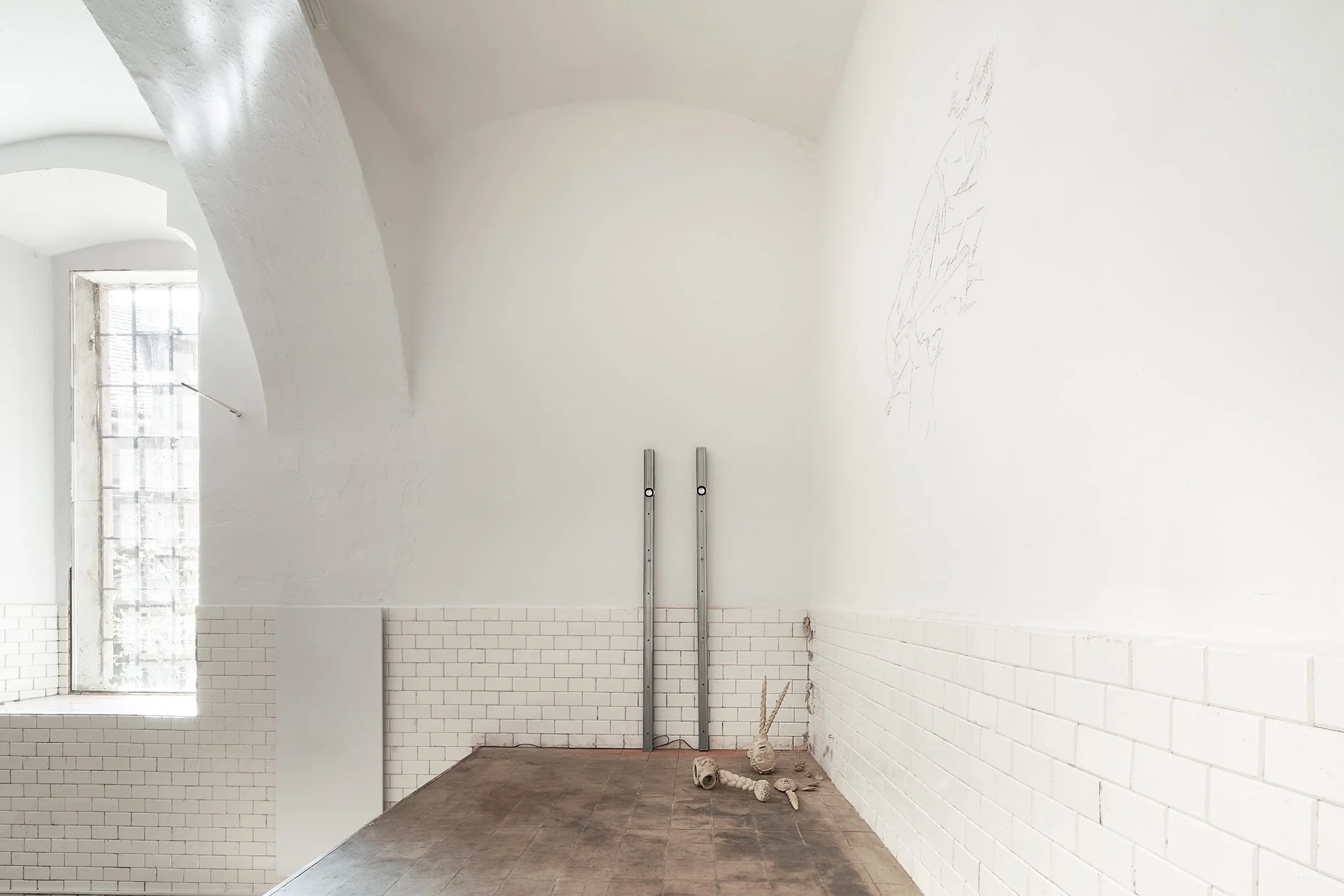
Anzhelika Palyvoda, Céline Struger
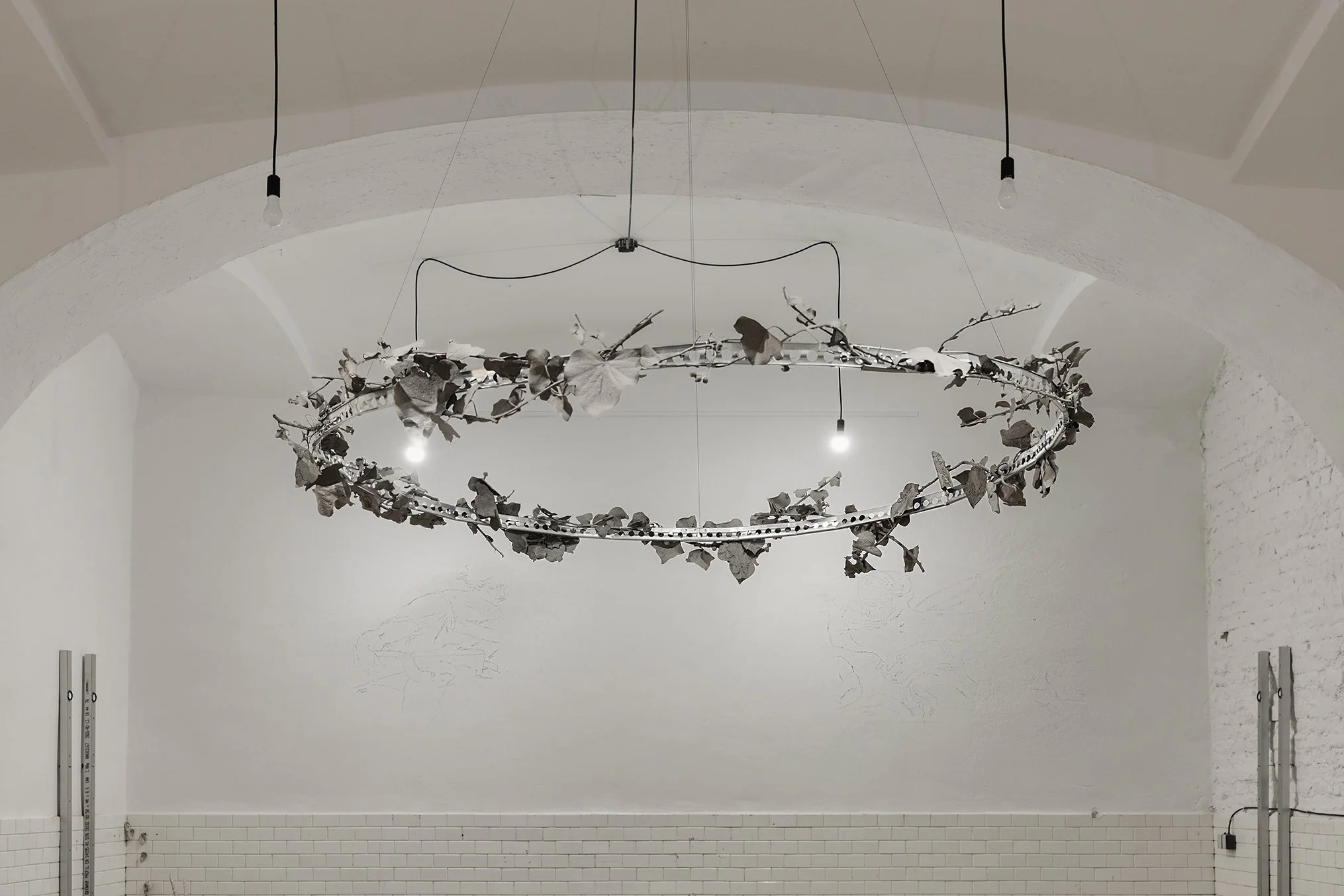
Anzhelika Palyovda KRANZ (II), 140×140 cm, concrete,metal wire, steel profile, found plants, 2026
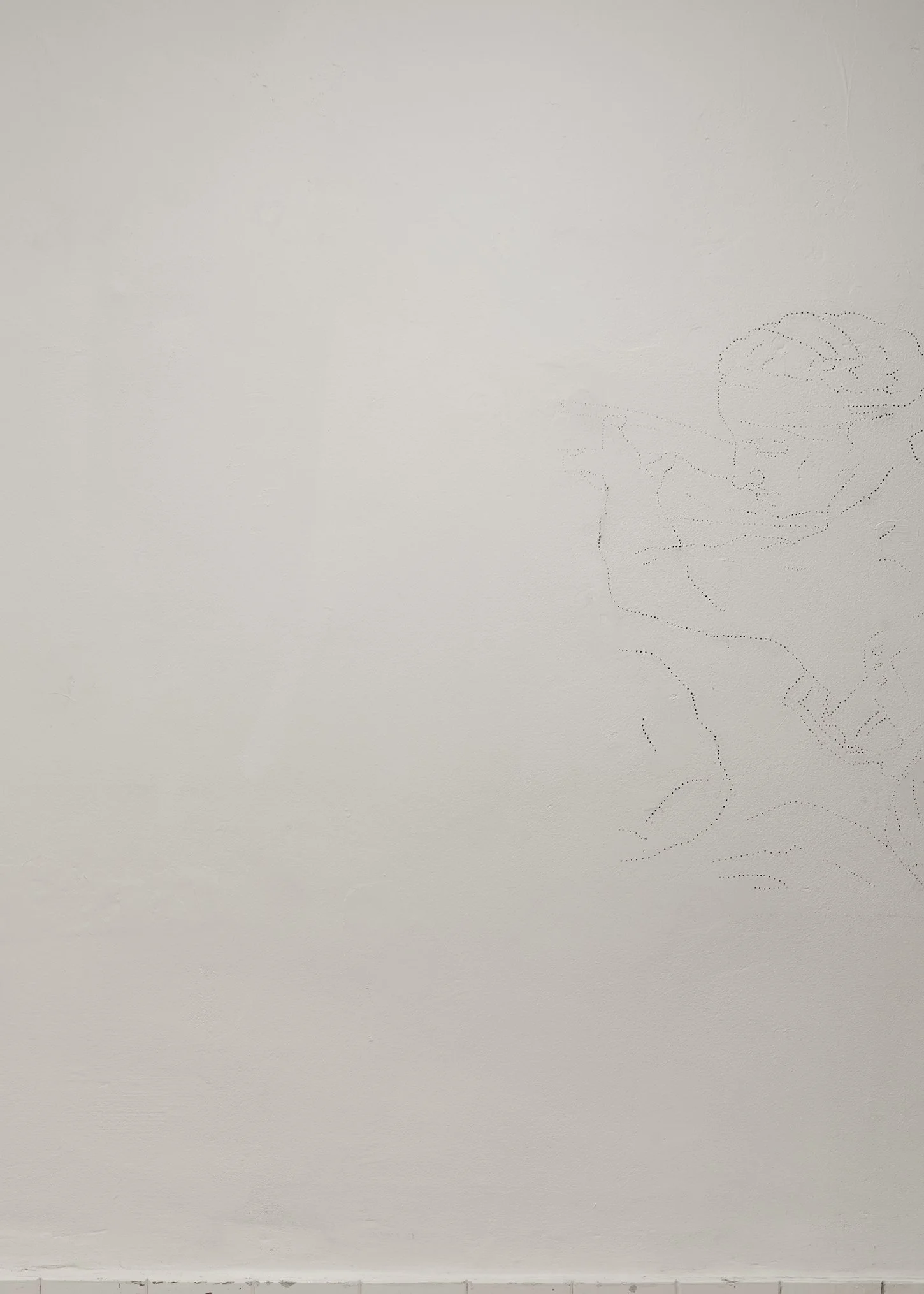
Anzhelika Palyovda DUST (4 SEBILLAS), charcoal dust, size variable, 2026
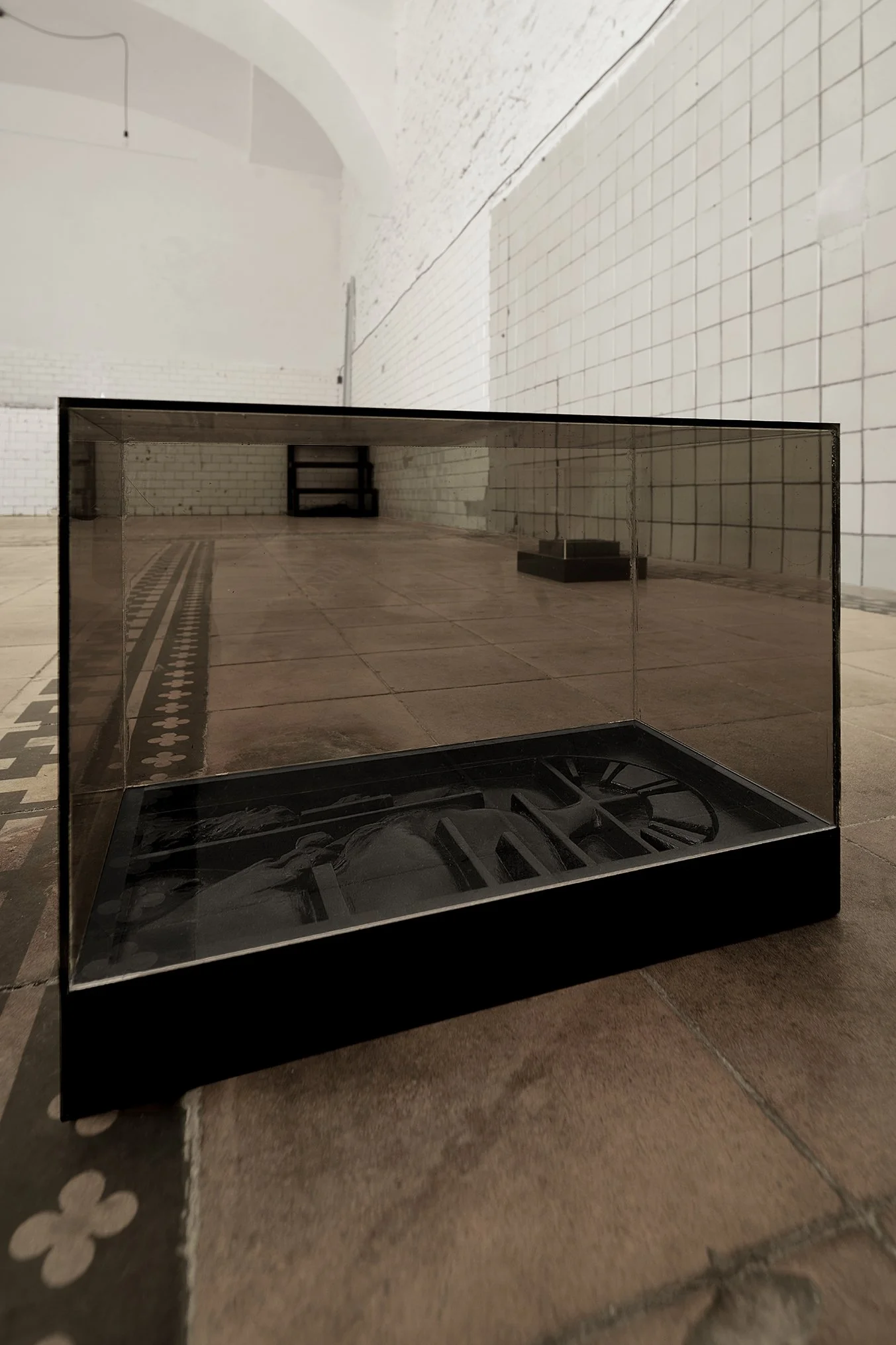
Sofiia Yesakova UGLY SCENES. NUANCES 2.2, 30×20×20 cm, wood, lacquer, acrylic glass, 2026